


Summary
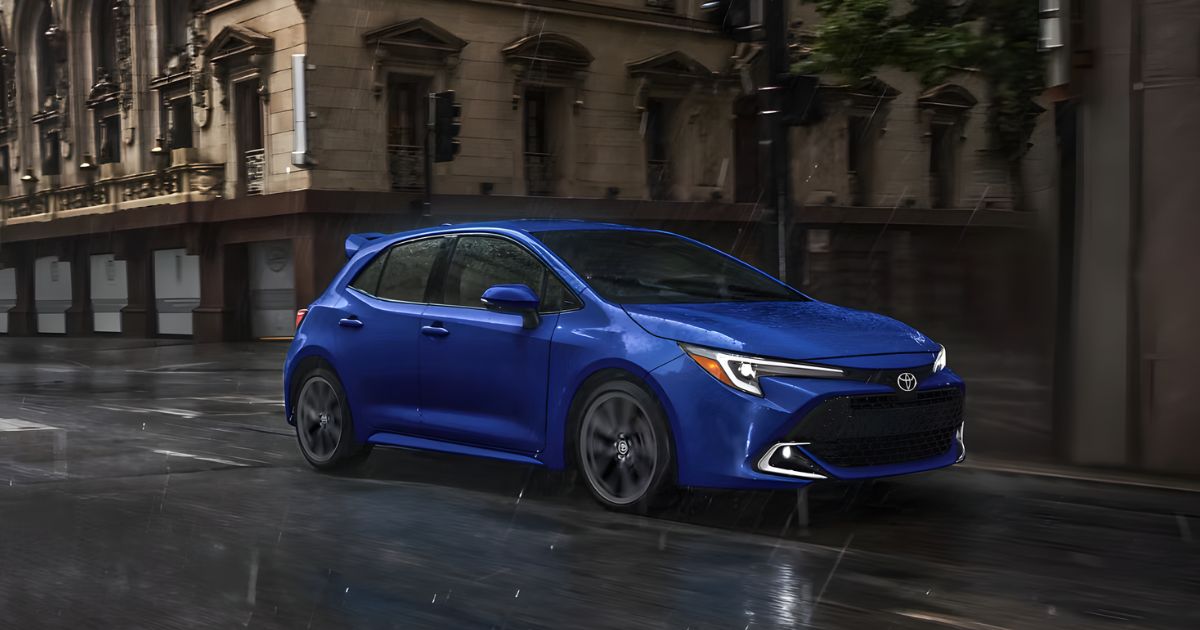
- The 2026 Corolla Hatchback is a top choice for driving in San Diego because it combines a small size with great fuel economy. It makes parking in crowded areas easy and keeps you safe in heavy traffic.
- The 2026 Toyota Corolla Hatchback comes with features like a 2.0L Dynamic Force Engine, three Drive Modes with paddle shifters, wireless Apple CarPlay and Android Auto, Toyota Safety Sense 3.0, and a sporty look that perfectly fits the Southern Californian lifestyle.
- If you want to buy a Toyota Corolla Hatchback for sale near San Diego, CA, visit Dalton Toyota National City to see their huge selection of cars today.
Also Read: Compact Car Showdown: 2026 Toyota Corolla vs Honda Civic in San Diego
The 2026 Corolla hatchback handles San Diego traffic with ease because of its small frame and advanced safety sensors. This is a compact hatchback that is easy to park, efficient enough to keep your fuel costs down, and loaded with safety technology so you stay alert and protected in stop-and-go conditions.
But if you’re wondering what specific Corolla Hatchback features make each trip through the city feel relaxed, read this article. We will break down why this compact hatchback is a smart pick for San Diego drivers.
Small Dimensions Make Parking Easy in San Diego, CA
Driving in San Diego, CA, often involves narrow streets and tight parking spots.
The Toyota Corolla hatchback length is about 172 inches, which is much shorter than most sedans or SUVs. This small size is a huge advantage when looking for a place to park near the San Diego Zoo or along the busy streets of North Park. Because it is a compact hatchback, it can slip into spaces that other drivers have to pass up.
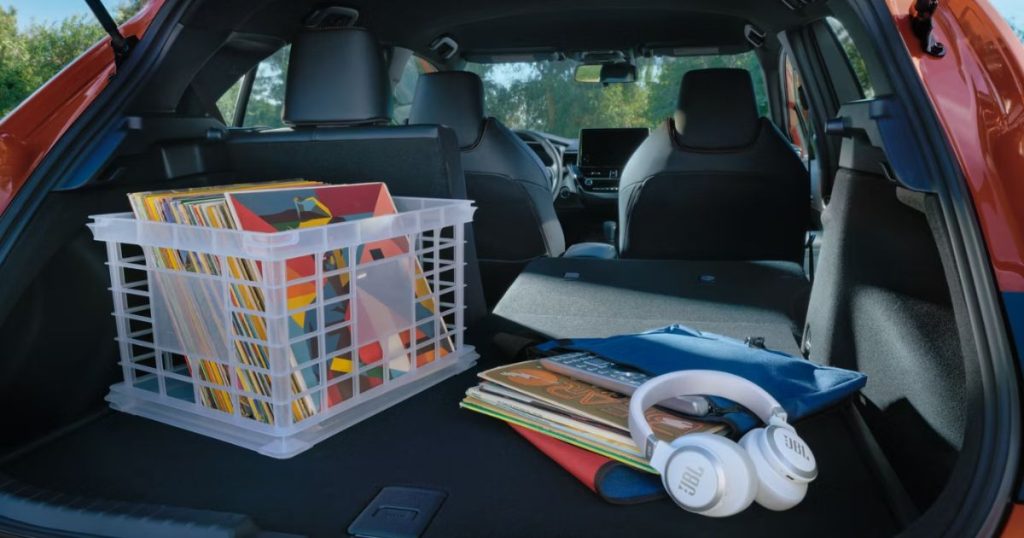
The hatchback body style also adds a practical edge over the sedan. The fold-down rear seats free up the cargo area, giving you space to fit a paddleboard bag, a cooler, camping gear, or furniture from IKEA Covina without needing a truck or SUV.
Also, the Toyota Corolla hatchback dimensions provide great visibility, so you can see exactly where your car’s corners are. Smaller cars are often more fun to drive in city traffic because they feel more like a go-kart than a heavy truck.
Save Money with the 2026 Corolla Hatchback MPG
Gas prices in Southern California are some of the highest in the nation. Thankfully, the 2026 Corolla Hatchback uses a 2.0L Dynamic Force Engine built for efficiency. This engine provides 169 horsepower, which is plenty of punch for merging onto the I-5 freeway.
Even with that power, the Toyota Corolla Hatchback MPG stays high. You can get up to 32 miles per gallon in the city and 41 miles per gallon on the highway with the SE trim.
For people who want to save even more at the pump, the 2026 Toyota Corolla Hatchback Hybrid is an excellent choice. Hybrid models combine a gas engine and an electric motor to reach up to 53 miles per gallon in the city, perfect for long commutes from National City to downtown San Diego, where you spend a lot of time sitting in stop-and-go traffic.
Using less gas means you have more money to spend on weekend trips to the beach or dinner with friends.
Sporty Style with the 2026 Toyota Corolla FX Hatchback
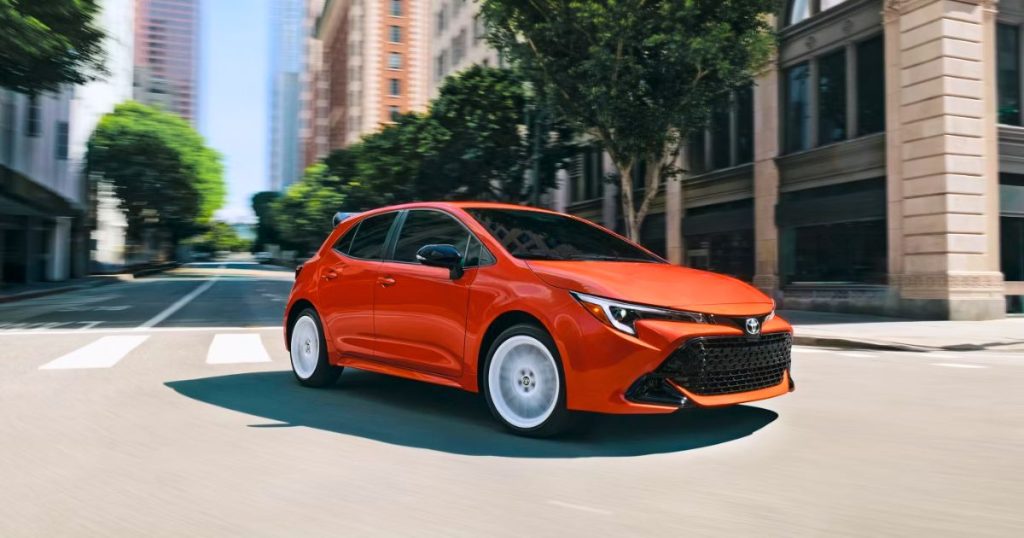
If you want a car that looks as fast as it feels, the FX Edition is a great pick. Toyota has announced the 2026 Corolla Hatchback FX edition as a tribute to the sporty Corollas of the past.
The 2026 Corolla Hatchback FX has an aggressive look with blacked-out details and a special rear wing. It features 18-inch alloy wheels with a gloss-white finish that are sure to get attention at the beach.
The 2026 Toyota Corolla Hatchback FX edition also has lowering springs that make the car sit a bit lower to the ground. This helps with handling and gives the car a more athletic stance.
Clearly, this model of the 2026 Corolla Hatchback is for people who want their daily driver to have a lot of personality.
The Toyota Corolla Hatchback Interior: Comfort Built for Long Commutes
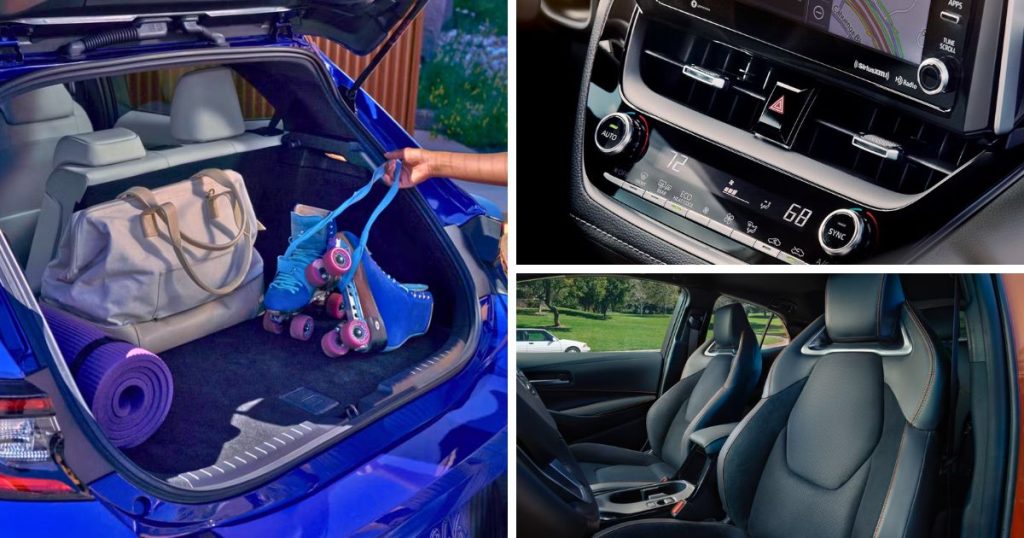
San Diego commuters can spend a lot of time in their cars. Hence, the inside of a vehicle matters just as much as what is under the hood. Hence, the Toyota Corolla Hatchback interior is a nice place to spend time, even when you’re stuck in traffic. This vehicle also has sculpted seats to hold you in place and keep you comfortable during long drives.
On the XSE trim, you can get SofTex-trimmed heated front sport seats that are perfect for those chilly morning drives along the coast. Dual-zone automatic climate control is also available, so the driver and passenger can each pick their own temperature.
Even though it is a small car, there is a surprising amount of room for your gear. Fold-down rear seats create a large flat area for surfboards, groceries, or luggage. The hatch opening is wide, which makes loading heavy items much easier.
Soft-touch materials on the dashboard and doors make the cabin feel more expensive than it is. These make the 2026 Corolla Hatchback a smart vehicle design that uses every inch of space efficiently.
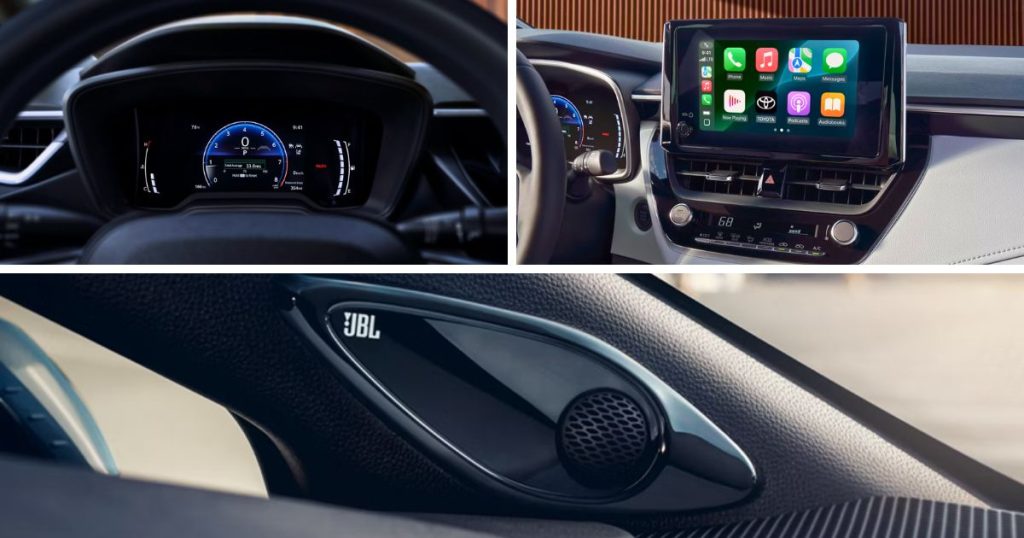
Technology Inside the 2026 Corolla Hatchback That Keeps You Connected
Technology is a huge part of the 2026 Corolla Hatchback experience. Every car comes with an 8-inch Audio Multimedia touchscreen display, serving as a hub for all your music and navigation. The FX and XSE trims also come with the available 7-inch digital gauge cluster to view pertinent driving info at a glance.
No more messy cables when connecting your phone to the car as you can use wireless Apple CarPlay or Android Auto. This allows you to use your favorite apps for maps and music right on the large screen.
If you love clear sound, the available JBL Premium Audio system* is a must-have. It features eight speakers and an amplifier to provide a concert-like experience.
There are also four USB-C ports (2 in front, 2 in the rear) throughout the car keep everyone’s devices charged. The Smart Key System lets you unlock the doors and start the engine with the push of a button while the key stays in your pocket.
Note:
* – Only available in the 2026 Corolla Hatchback XSE
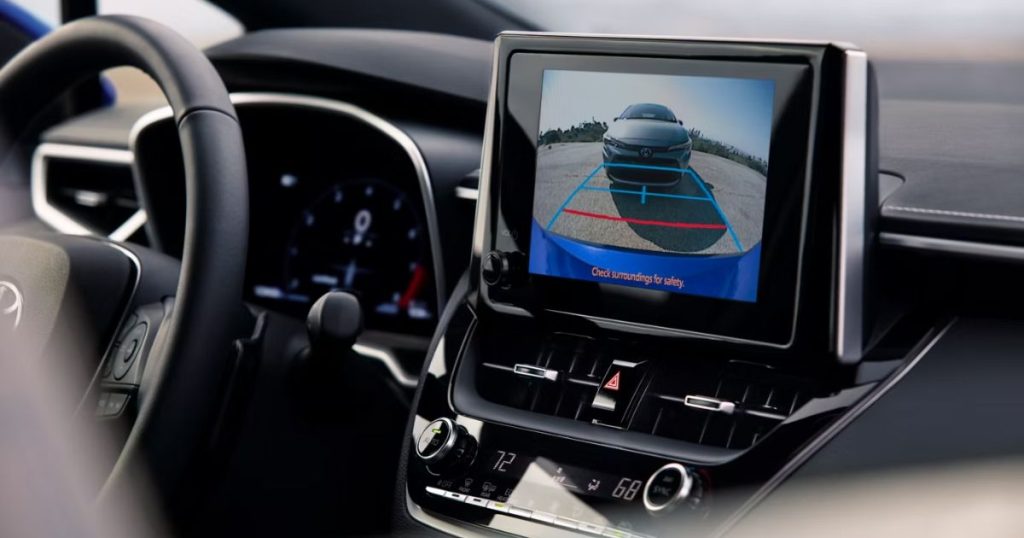
Advanced Safety Technology for Crowded Freeways
Safety is a major concern when you are surrounded by thousands of other cars on the freeway. Hence, one of the 2026 Toyota Corolla Hatchback features is the Toyota Safety Sense 3.0 suite as a standard part of the package.
Toyota Safety Sense 3.0 Protects Every Passenger
The Toyota Safety Sense 3.0 system uses cameras and radar to look out for danger. One key tool is the Pre-Collision System with Pedestrian Detection, which alerts you if a crash is about to happen and can even apply the brakes automatically to help avoid an accident.
The car also features Lane Departure Alert with Steering Assist to warn and gently steer you back into place if you drift out of your lane without using a signal.
Full-Speed Range Dynamic Radar Cruise Control helps you keep a set distance from the car in front of you, even when traffic slows down to a crawl.
Other tools that make driving safer for everyone on the road in every version of the 2026 Corolla Hatchback include:
- Road Sign Assist uses a camera to read speed limit signs and stop signs, then shows them on your dashboard. This is helpful if you miss a sign while focusing on a difficult merge.
- Automatic High Beams can switch between high and low beams depending on the light from other cars.
- Proactive Driving Assist can provide gentle braking or steering support to keep a safe distance from other vehicles or cyclists. It can even help you slow down as you enter a curve, acting like a co-pilot that is always watching the road with you.
- LATCH system makes it easy for families to install child seats securely in the back.
High Crash Test Ratings Provide Peace of Mind
The Toyota Corolla Hatchback is built with a strong safety cage. Independent groups have tested the car to see how well it protects people in a crash.
The Insurance Institute for Highway Safety gave the car a “Good” rating in several important tests. This includes the small overlap front test, which looks at what happens if the front corner of the car hits an object.
The vehicle also comes with ten airbags to protect everyone inside the cabin. This includes side curtain airbags and knee airbags for the driver. Having these high ratings means you can feel confident when you are driving your family around town.
The 2025 Toyota Corolla Hatchback even received a 5-star overall safety rating from the government. You get the same high level of protection in the 2026 models.
All these Corolla Hatchback features work together to reduce the stress of a long commute.
Why the Compact Size of the Toyota Corolla Hatchback Is a Real Advantage in San Diego
Size matters in a city. San Diego has some of the tightest street parking and most crowded parking structures in Southern California, especially in areas like Old Town, Little Italy, and the beach communities. Hence, the Corolla Hatchback’s compact dimensions make it naturally easier to park and navigate through tight gaps in traffic.
Thus, when you are ready to see this car for yourself, visit Dalton Toyota National City. Our team can help you compare the 2026 Toyota Corolla Hatchback SE with the other trims based on your budget. You can also check our selection of used and new Toyota Corolla Hatchback models to get behind the wheel of the one that fits your life.
Read Next: Why The Toyota Land Cruiser San Diego is the Ultimate SUV Choice
Summary
- The 2026 Toyota Tundra Limited is the best truck for San Diego driving, providing more luxury and power than older models, making every trip more comfortable.
- The 2026 Toyota Tundra Limited features a huge 14-inch screen, real leather seats, and a hybrid engine that gives you 437 horsepower for towing heavy loads.
- If you’re buying a 2026 Toyota Tundra Limited for sale near National City, CA, visit Dalton Toyota National City to see the feature upgrades in this latest model.
Also Read: Common Transmission Issues Drivers Should Watch For
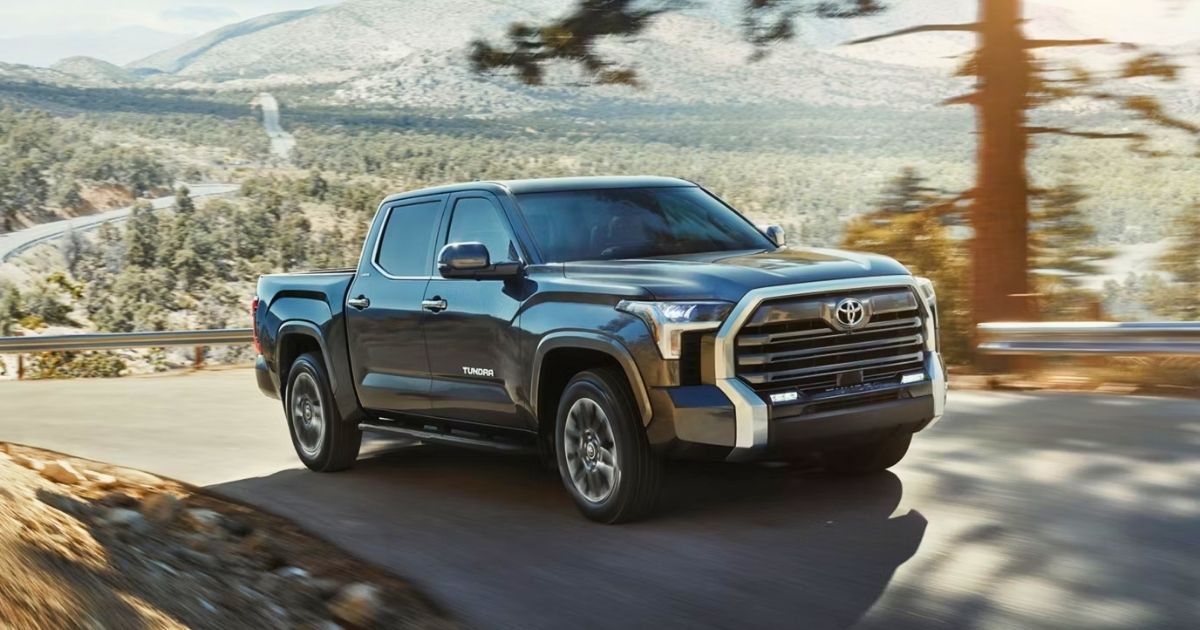
The 2026 Toyota Tundra Limited is the top choice for San Diego CA, because it combines a high-end cabin with the massive power needed to climb local mountain trails and merge onto busy highways. This newest model upgrades the seats to real leather while keeping the giant 14-inch touchscreen that helps you navigate city streets with ease.
And, if you choose the Tundra Limited, you have the latest safety tech and a smooth ride on every trip. If the Tundra Limited is the full-size SUV of your dreams, this guide will break down everything about it, including what changed from the 2025 model, and how you can get one at Dalton Toyota National City.
Comparing the 2025 Toyota Tundra vs 2026 Toyota Tundra
If you are looking at the 2025 Toyota Tundra vs 2026 Toyota Tundra, there are a few key details to keep in mind.
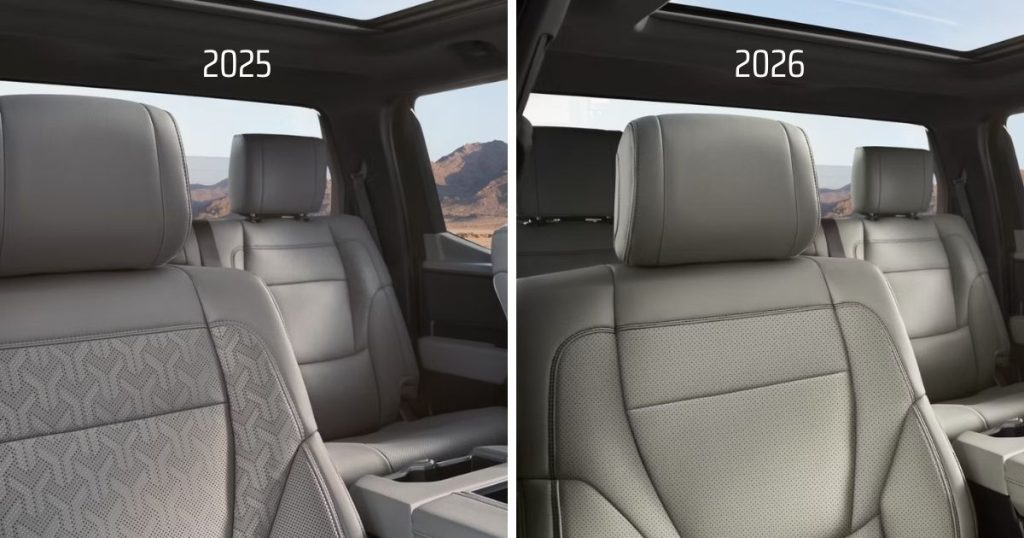
The most important of the 2025 Toyota Tundra vs 2026 Toyota Tundra differences is the seat material. The 2025 Toyota Tundra Limited came with SofTex seats, which is a high-quality synthetic leather. However, the 2026 Toyota Tundra Limited has moved up to real leather seats as a standard feature, making the newer model feel more expensive and luxurious inside.
You can also note updated tech in the 2026 Tundra Limited.
Though the size of its screen remains the same, the one in the latest Tundra Limited has faster processing, improved functions for voice activation, and sharper graphics. Plus, there is an available Panoramic View Monitor on more trims. Wireless charging is also a standard, with the cabin featuring multiple USB-C ports throughout.
These changes show that Toyota is focusing on making the Limited trim a more premium option within the Tundra trim levels.
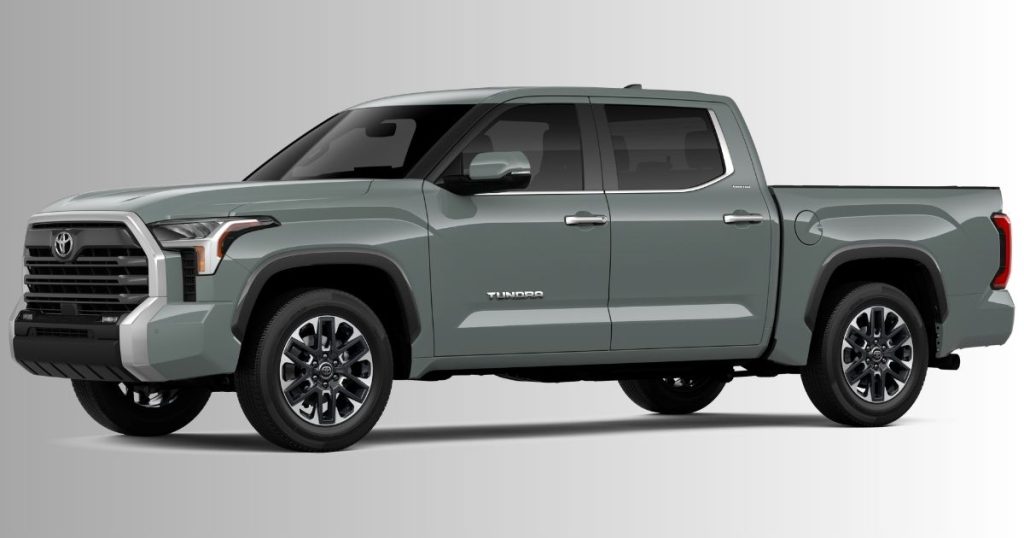
2026 Toyota Tundra Limited Exterior: Tough Looks With Smart Design
The exterior of the 2026 Toyota Tundra Limited is bold and purposeful. High-performance LED headlights give Tundra a striking look, with available dynamic sequential turn signals, Daytime Running Lights, and LED low and high beams.
The 2026 Toyota Tundra Limited also has 20-in. alloy wheels* that fill out the wheel wells properly and give the truck a planted, confident stance.
The available active aero front splitter adapts to driving conditions. Hence, when you are driving above 37 mph, it automatically deploys to modify airflow for maximum aerodynamic efficiency. This detail matters more than it sounds on freeway driving in San Diego CA, where fuel economy gains from better aerodynamics are real and consistent.
The truck’s body uses lightweight aluminum throughout, and high-strength steel where it is needed most. Every piece of metal is thoughtfully placed for enhanced overall efficiency, durability, and safety.
Note:
* – As part of an Option package
Understanding the 2026 Toyota Tundra Limited Specs and Power
The 2026 Toyota Tundra Limited specs show two powerful engine options for local drivers. The standard choice is a twin-turbo V6 engine that produces 389 horsepower and 479 lb-ft of torque. This engine is paired with a smooth 10-speed electronically-controlled automatic transmission with intelligence, so the truck shifts quickly while driving on the I-5 freeway.
For the most power possible, you can choose the 2026 Toyota Tundra Limited Hybrid, which adds an electric motor to the mix. The 2026 Toyota Tundra Limited Hybrid generates an amazing 437 horsepower and 583 lb-ft of torque. This extra power helps pull a heavy trailer up steep hills in East County.
Based on the 2026 Toyota Tundra Limited specs, the hybrid model achieves better fuel economy, too. You can expect about 20 MPG in the city and 24 MPG on the highway with the hybrid setup.
These 2026 Toyota Tundra Limited specs prove that a full-size truck can be both powerful and efficient for city driving.
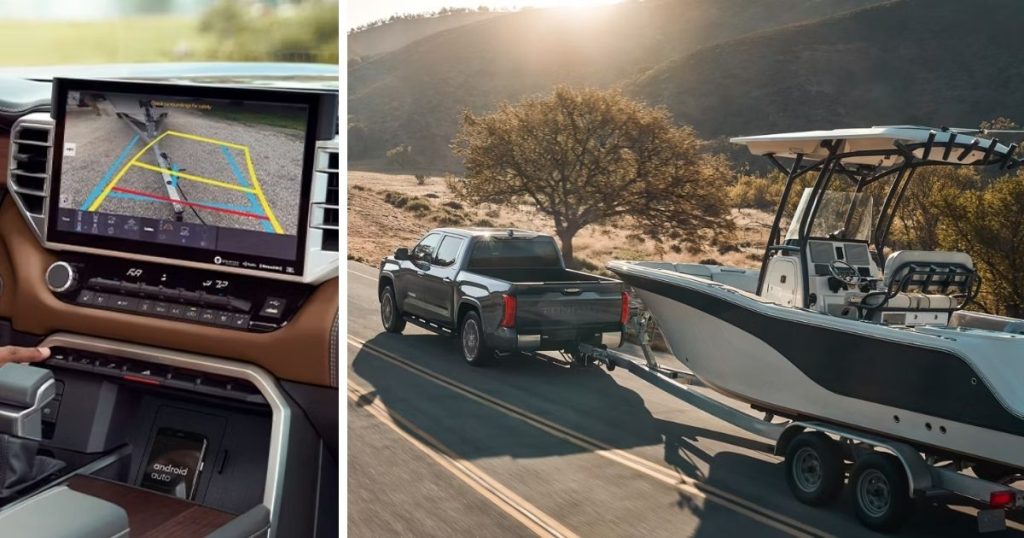
Towing and Utility of the Tundra Limited for San Diego Adventures
The 2026 Toyota Tundra Limited towing capacity reaches up to 11,350 pounds, enough to pull large boats or campers. To help you tow safely, the truck includes available heated power extending tow mirrors with Blind Spot Monitor* for a wider view of your trailer.
Another helpful feature in the 2026 Toyota Tundra Limited features list is the Trailer Backup Guide with Straight Path Assist*. This system uses cameras and sensors to help you keep your trailer in a straight line while backing up into a parking spot.
The bed of the truck is built to be just as tough as the engine. It is made from an ultra-durable Sheet-Molded Composite surface that protects it from dents and rust. You don’t need a bed liner because this surface can take a beating from heavy tools or outdoor gear.
The 2026 Toyota Tundra Limited features also include a hands-free tailgate with knee assist that you can open with your key fob. For people with their hands full, there is even a sensor that lets you close the tailgate with a gentle nudge of your knee.
Note:
* – As part of an Option package
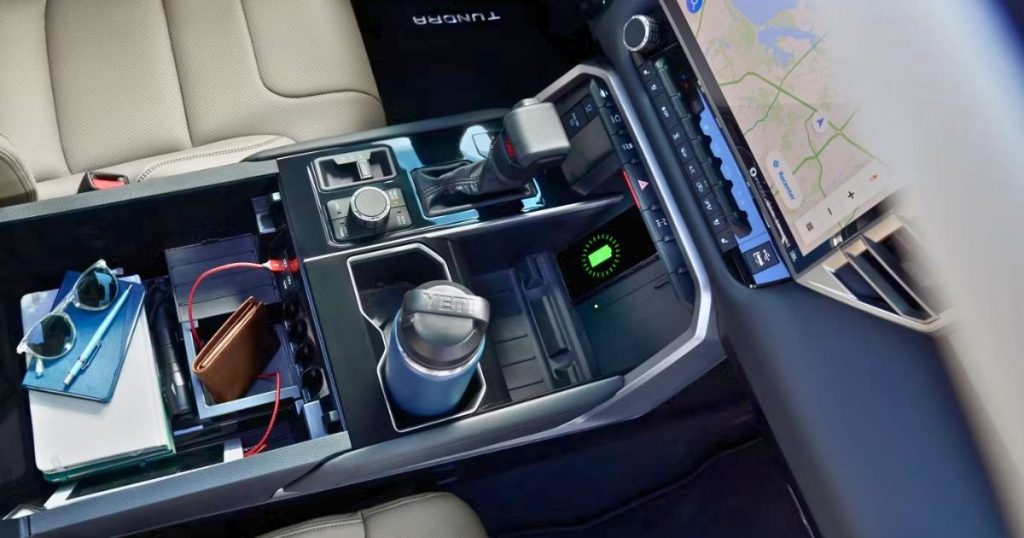
2026 Toyota Tundra Limited Interior: Premium Without Going Overboard
Leather Seats, Large Screen, and Comfort That Fits San Diego Life
The 2026 Toyota Tundra Limited interior is where this trim separates itself from the lower tiers.
Leather-trimmed 8-way power-adjustable front seats come standard, which is a meaningful upgrade over the SofTex material found on the 2025 Toyota Tundra Limited. The truck features available heated and ventilated front and rear seats, so you can warm up on the way to the mountains or cool down when you are under the desert sun.
The 14-inch multimedia touchscreen is large and clear, handling navigation, audio, off-road data, and towing functions all in one place. The available 12.3-inch digital gauge cluster gives you access to safety and convenience features, navigation, audio controls, off-road features, and towing functions.
These two screens working together mean information is always easy to find. This is helpful whether you are navigating through downtown San Diego, CA, or heading out toward Anza-Borrego.
Connectivity, Audio, and Wi-Fi Built Right In
The Toyota Audio Multimedia system enhances every moment behind the wheel by helping you stay connected to every adventure. Wireless Apple CarPlay and wireless Android Auto are both supported, so there is no cable to fumble with.
The available JBL Premium Audio system includes 12 speakers, a 1200-watt output, a subwoofer, and an amplifier. That system is not standard on the Limited trim, but it is an available add-on worth considering.
With an active Wi-Fi Connect trial or subscription, you can connect up to five devices, turning your Tundra Limited into a hotspot. For families heading to the beach or weekend camping at Palomar Mountain, that is genuinely useful.
Top Safety Ratings and Advanced Tech in the 2026 Toyota Tundra
Safety is important for families in San Diego CA. The 2026 Toyota Tundra Limited comes standard with Toyota Safety Sense 2.5, a system which includes:
- Pre-Collision System that can spot people in the road and help you brake to avoid a crash
- Lane Departure Alert to warn you if you are drifting out of your lane on the highway
- Blind Spot Monitor that tells you if a car is in the spot next to you before you change lanes.
Even the 2026 Toyota Tundra Limited tire size and active aero front splitter help the truck stay stable and efficient at high speeds.
Apart from those safety features, this truck has also performed well in crash tests. It received ‘Good’ ratings from the IIHS for both driver and passenger protection in front and side crashes, thanks to the high-strength steel in the frame to keep everyone safe during an accident.
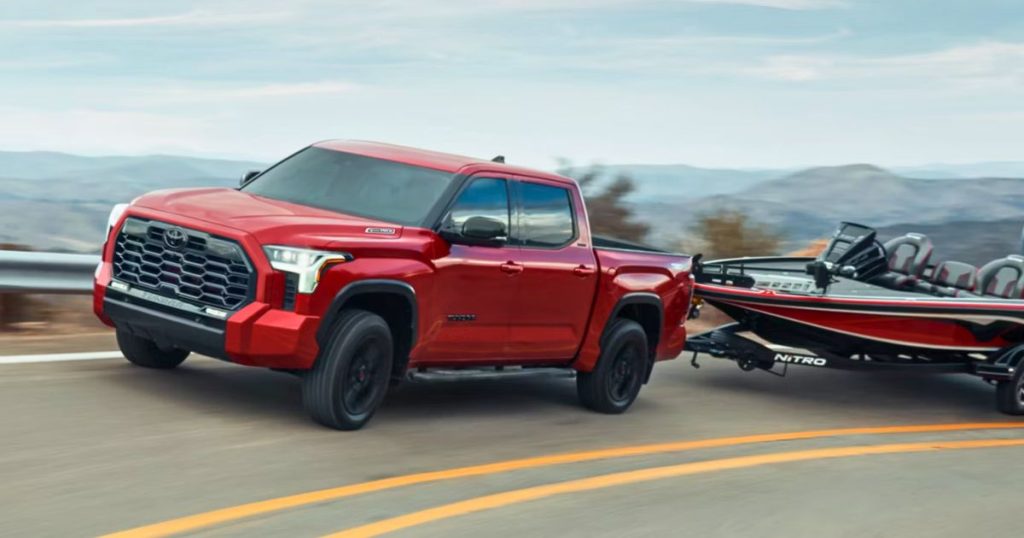
2026 Toyota Tundra Limited TRD Off-Road Package: Desert and Trail Ready
San Diego’s geography makes the 2026 Toyota Tundra Limited TRD option particularly appealing. The TRD Off-Road Package is available on the Limited trim, transforming an already capable truck into one that can take on rough terrain.
The TRD Off-Road Package includes:
- 20-inch alloy wheels on the Limited trim wrapped in Falken WILDPEAK All-Terrain tires, and
- Bilstein shocks to help steady the course on rock, dirt, and mud
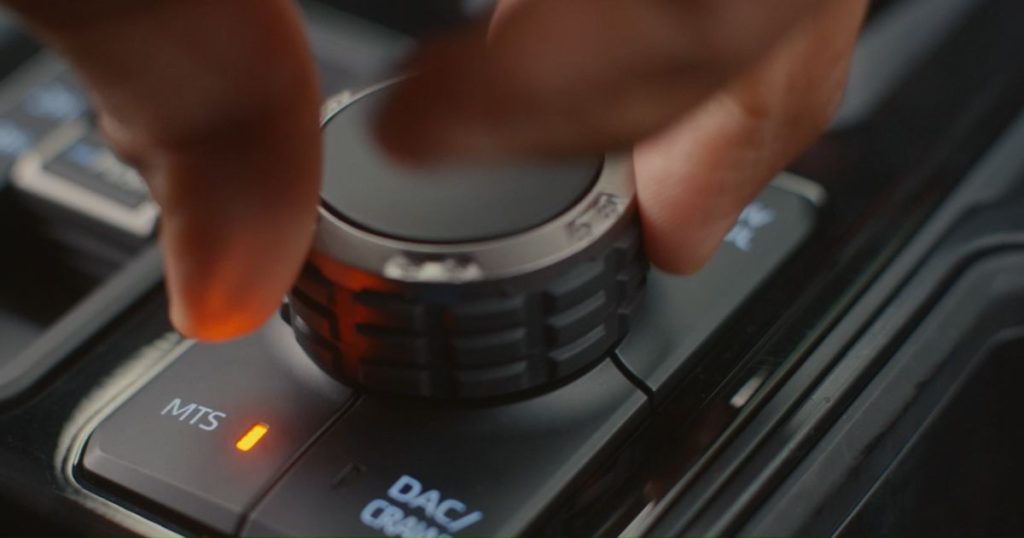
The available Multi-Terrain Select system automatically adjusts engine throttle and traction control. This feature lets you toggle between terrain modes, including Mud, Sand, Rock, and Auto, using a simple dial. For Ocotillo Wells, Glamis, or any of San Diego’s surrounding off-road parks, this makes a real difference.
The available electronically controlled locking rear differential evenly distributes engine power to both rear wheels, providing more grip in low-traction conditions.
Why the Tundra Limited is the Best Choice for Local Drivers
The 2026 Toyota Tundra Limited is the perfect fit for the California lifestyle. It has the luxury of a high-end SUV inside the Toyota Tundra Limited interior, but still has the 11,350-lb Toyota Tundra Limited towing capacity for your weekend adventures. The 2026 Toyota Tundra Limited MPG is also competitive, especially if you choose the hybrid model, to save money at the pump.
Thus, if you are ready to make the 2026 Toyota Tundra Limited yours and you’re in Coronado or El Cajon, visit Dalton Toyota National City today! We’ve got an expert team who can walk you through all the Tundra trim levels, other certified used vehicles, and available packages to suit your lifestyle.
Key Takeaways
- The 2026 Toyota Sequoia is the top choice for families in Southern California who want a mix of massive power and great fuel savings.
- This vehicle features a strong hybrid engine with 437 horsepower, a high towing limit of 9500 pounds, and a 14-inch touchscreen. It also earned top safety scores from the Insurance Institute for Highway Safety to keep your family safe on the road.
- To buy a 2026 Toyota Sequoia for sale or a certified used vehicle near San Diego, CA, visit Dalton Toyota National City today and choose the perfect trim for your lifestyle.
Also Read: Car Dealerships That Trade Cars: This San Diego Dealership Makes Trading Easy
The 2026 Toyota Sequoia continues to be a top choice for San Diego families needing space, power, and reliability in one package. It combines a fuel-efficient hybrid engine with enough power to handle every local adventure while saving on gas and keeping every passenger comfortable.
But what Toyota Sequoia 2026 changes have been applied to this newest model? Apart from visiting Dalton Toyota National City, this guide breaks down the features contributing to its efficiency and power.
A Hybrid Engine Designed for San Diego Traffic and Hill Climbs
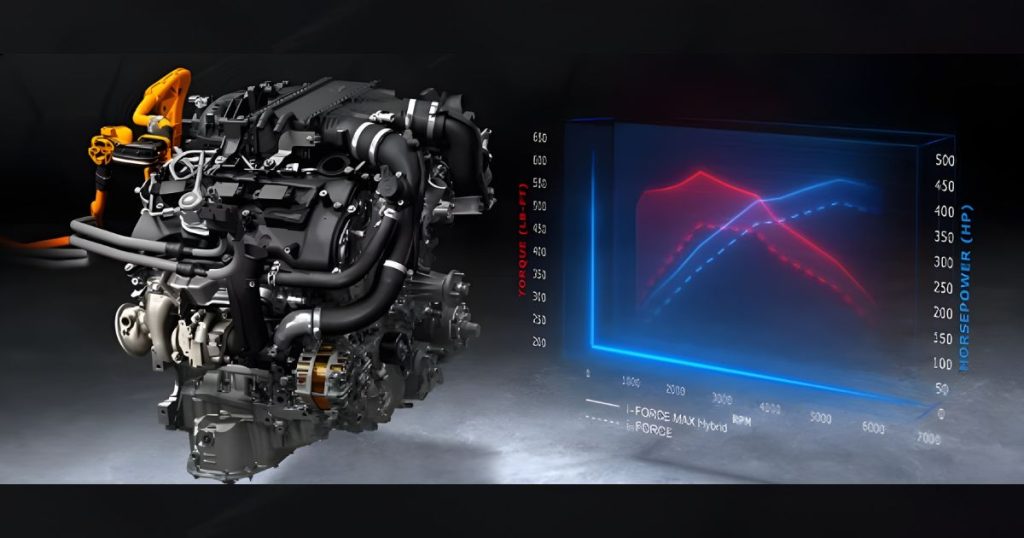
The 2026 Toyota Sequoia Hybrid uses the 3.4-liter i-FORCE MAX powertrain to deliver an exciting and smart ride. This system pairs a twin-turbo V6 engine with an electric motor to create a huge 437 horsepower and 583 lb-ft of torque. These 2026 Toyota Sequoia engine specs ensure you have all the muscle needed to climb the steep hills.
Even with all this power, the 2026 Toyota Sequoia fuel economy stays high for its class. The 2026 Toyota Sequoia hybrid MPG ratings reach an estimated 22 combined MPG. This 2026 Toyota Sequoia gas mileage helps you spend less money on gas while you commute on the I-5 or the I-15.
Plus, the hybrid system works quietly too, which means less engine noise during your morning commute through Downtown. When you look at the Toyota Sequoia fuel consumption compared to the Toyota Sequoia 2025 model, you will see that Toyota continues to lead in efficiency.
Hence, drivers who want a 2026 Toyota Sequoia for sale will enjoy how this engine makes every trip smoother and more affordable.
Powerful Towing Features for Trips to Mission Bay
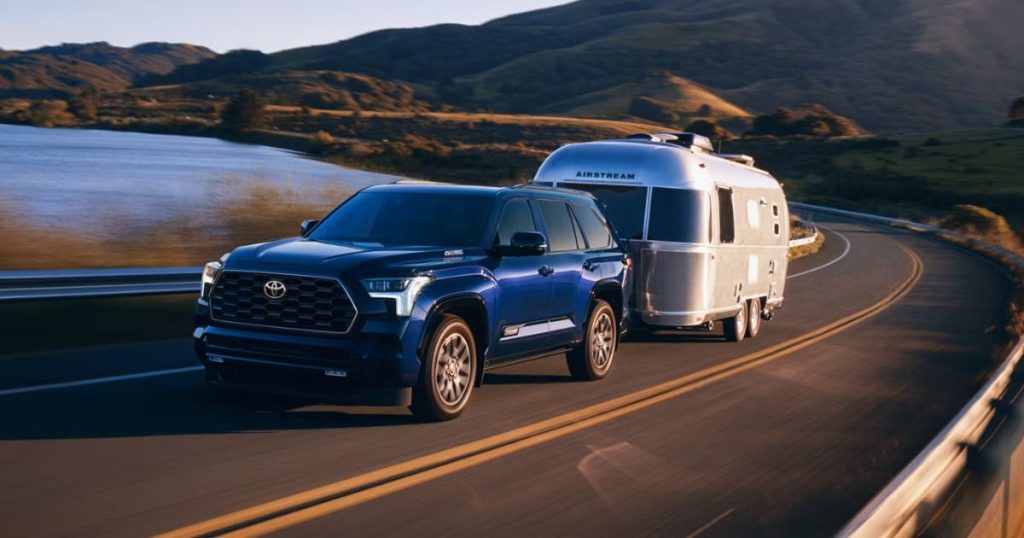
If you enjoy taking a boat to Mission Bay or a camper to the mountains, the 2026 Toyota Sequoia towing capacity serves you well. This SUV can pull up to 9500 lbs, which is a massive number for a vehicle that is so comfortable. This is all thanks to its hybrid powertrain’s electric motor that can give instant torque when it’s needed the most.
This Toyota Sequoia towing capacity is backed up with smart tools like:
- The integrated trailer brake controller helps the SUV and the trailer work together when you need to slow down.
- Tow Technology Package (autodimming digital rearview mirror and a Trailer Backup Guide with Straight Path Assist) clearly sees behind your trailer and keeps it in a straight line while backing up
- Tow/Haul and Tow+ modes to adjust the transmission settings, optimize its towing capabilities, and performance when driving on inclined roads or dirt trails
- Available power extending tow mirrors that fold and retract to help you see around wide loads
These features make the 2026 Toyota Sequoia a towing titan that gives you peace of mind on every trip.
Off-Road Readiness for Your Next Desert Adventure
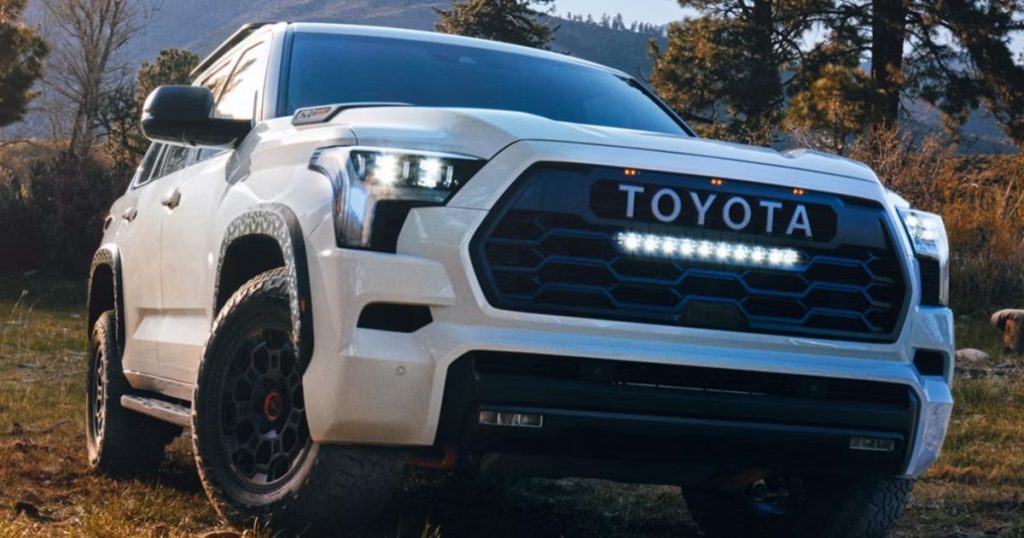
San Diego is close to many beautiful trails, and the 2026 Toyota Sequoia TRD Pro can take you there. This specific model features a unique black “TOYOTA” heritage front grille with a light bar and amber marker lights to help you see in the dark.
The Toyota Sequoia 2026 changes include a new color called Wave Maker Blue that is only for the TRD Pro model. If you want a 2026 Toyota Sequoia TRD Pro Wave Maker, you will have an SUV that truly stands out in any setting.
The 2026 Toyota Sequoia TRD Pro also comes with high-quality FOX Internal Bypass shocks and a special front stabilizer bar. You can use Multi Terrain Select to choose between five modes that adjust the engine and traction for mud, sand, or rocks.
If you are on a steep hill, Downhill Assist Control helps apply the brakes for you. You’ll also find a feature called Crawl Control that manages the speed so you can just focus on steering around obstacles.
All these tools make the 2026 Toyota Sequoia TRD Pro one of the best off-road vehicles you can buy.
Six Luxury Grades for Every Type of Driver
The 2026 Toyota Sequoia interior is filled with high-end materials and smart features that make long drives feel shorter. It offers three rows of seating with room for up to eight passengers.
The third row seats can slide and fold to fit more beach gear or groceries. This space comes in handy when carpooling to Petco Park or taking the extended family to dinner in Little Italy.
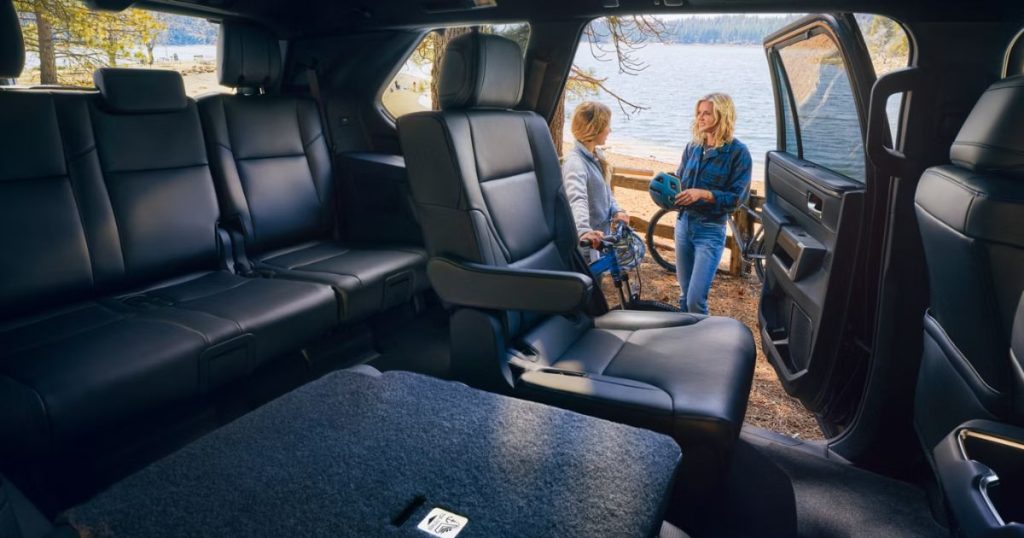
However, you can configure the second row as captain’s chairs in some trims, dropping the capacity to 7 but adding more comfort for longer trips. The 2026 Sequoia’s cargo space also stands out as one of the Sequoia’s best features. Behind the third row, you get 22.3 cubic feet of space, enough for groceries or beach gear.
Fold down the third row, and that expands to 49.0 cubic feet. Drop all rear seats flat, and you have 86.9 cubic feet, perfect for hauling surfboards, camping equipment, or furniture from the store.
But the 2026 Toyota Sequoia interior and exterior design details aren’t just the same across every model. You have six unique grades to choose from to find the perfect match for your life in San Diego, CA.
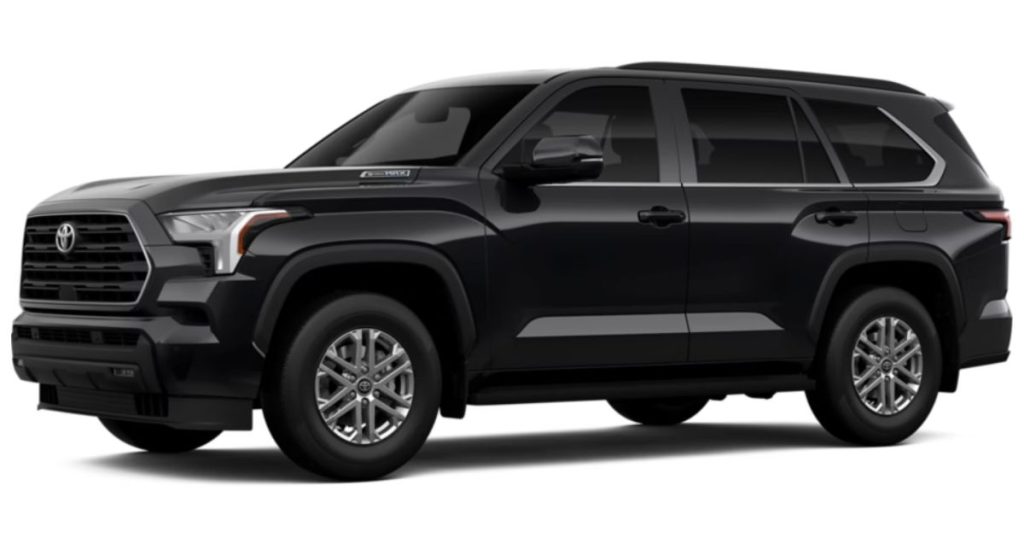
The 2026 Toyota Sequoia SR5 is the base model and includes 18-inch silver-painted alloy wheels and an 8-inch Toyota Audio Multimedia touchscreen.
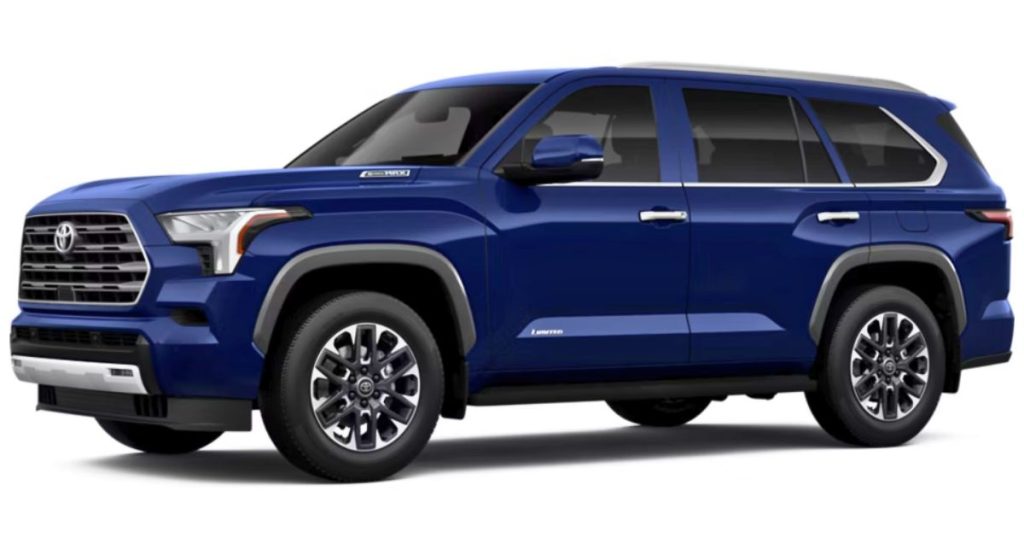
Moving up to the 2026 Toyota Sequoia Limited adds 20-inch gray-painted and machine-finished alloy wheels. This trim also comes with heated and ventilated leather-trimmed seats that are adjustable in 8 ways.
For more luxury, the 2026 Toyota Sequoia Platinum provides a power tilt/slide panoramic roof and premium LED headlights.
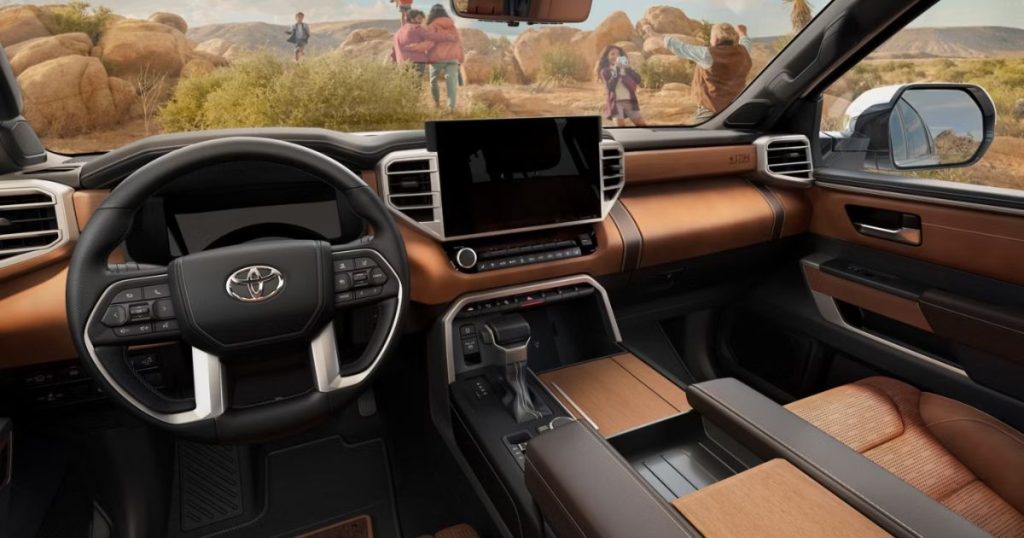
For a more classic look, the 1794 Edition features a premium Saddle Tan interior with real American walnut wood trim. You will love the high-quality sound from the available 14-speaker JBL audio system.
The 2026 Toyota Sequoia TRD Pro is the best choice for adventure lovers with its rugged suspension, 18-inch TRD Pro matte-black forged-aluminum BBS wheels with TRD center caps, and black “TOYOTA” heritage grille.
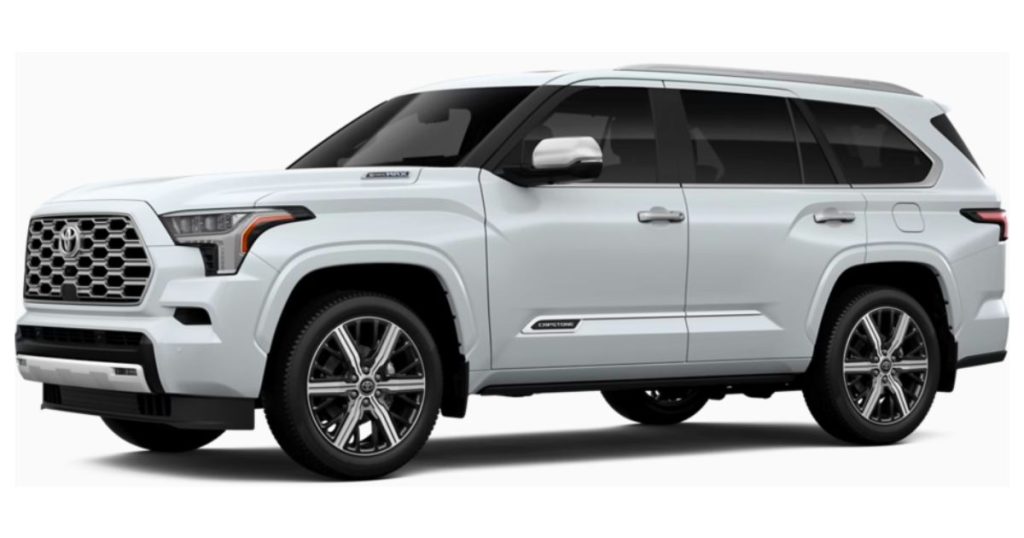
Finally, the 2026 Toyota Sequoia Capstone comes with 22-inch dark chrome wheels and premium textured leather seats. You can even get the 2026 Toyota Sequoia Capstone Wind Chill Pearl to give your SUV a bright and clean look.
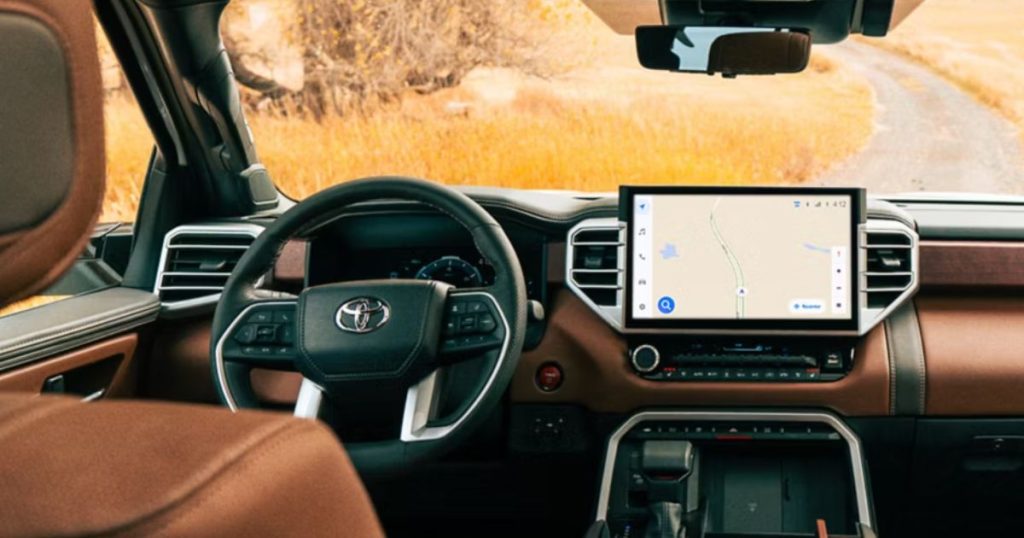
The good thing, though, is that most models come with a 14-inch touchscreen that works with wireless Apple CarPlay and Android Auto. The Toyota Sequoia 2026 interior updates also include a customizable 12.3-inch digital gauge cluster to show the info you want.
Top Safety Ratings to Protect Your Loved Ones
Safety is important for families, and the 2026 Toyota Sequoia is a leader in this area. It earned the highest rating of ‘Good’ from the Insurance Institute for Highway Safety in both frontal and side crash tests. This means the 2026 Toyota Sequoia length and structure keep everyone safe during an accident.
The vehicle also comes with a strong safety cage and eight total airbags to protect from every angle.
Every model includes Toyota Safety Sense 2.5 as a standard feature. This system uses the Pre-Collision System with Pedestrian Detection to help avoid crashes. You also get Lane Departure Alert with Steering Assist and Dynamic Radar Cruise Control to make highway driving easier.
When you see the 2026 Toyota Sequoia specs, you will realize that Toyota put safety at the top of the list.
Find Your Perfect Sequoia at Dalton Toyota National City
The 2026 Toyota Sequoia brings together power, space, and efficiency in a package perfect for San Diego living. The Toyota Sequoia 2026 changes enhance an already strong SUV, making it even better suited for California families.
If you are ready to see the Toyota Sequoia 2026 changes, visit Dalton Toyota National City. We have a wide selection of Dalton Toyota National City cars and can help you compare the 2025 vs 2026 Toyota Sequoia models.
Schedule a test drive now to feel the hybrid engine’s power yourself and learn why the 2026 Toyota Sequoia is the perfect SUV for San Diego families.
Read Next: 7 Times A Grinding Sound When Braking Means Your Toyota Needs Service
TL;DR
- The 2026 Toyota Camry Hybrid is one of the best choices for drivers in Southern California, offering excellent gas mileage and top-tier safety ratings. It helps you save money on gas while keeping your family safe on busy freeways.
- This new sedan comes with an all-hybrid engine and available All Wheel Drive, plus advanced tools like a large touchscreen and automatic emergency braking.
- If you’re shopping for a Toyota Camry San Diego, CA today, visit Dalton Toyota National City to check the different trims and take a test drive.
Also Read: Camry vs Corolla: Which Toyota Is Right for San Diego, CA Drivers?
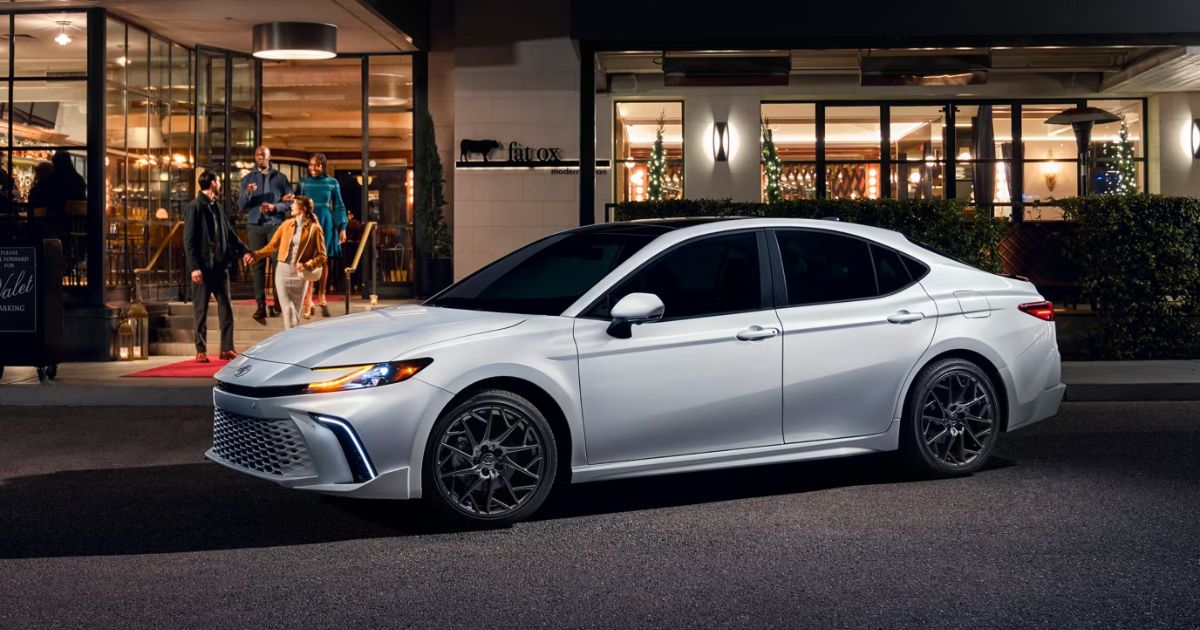
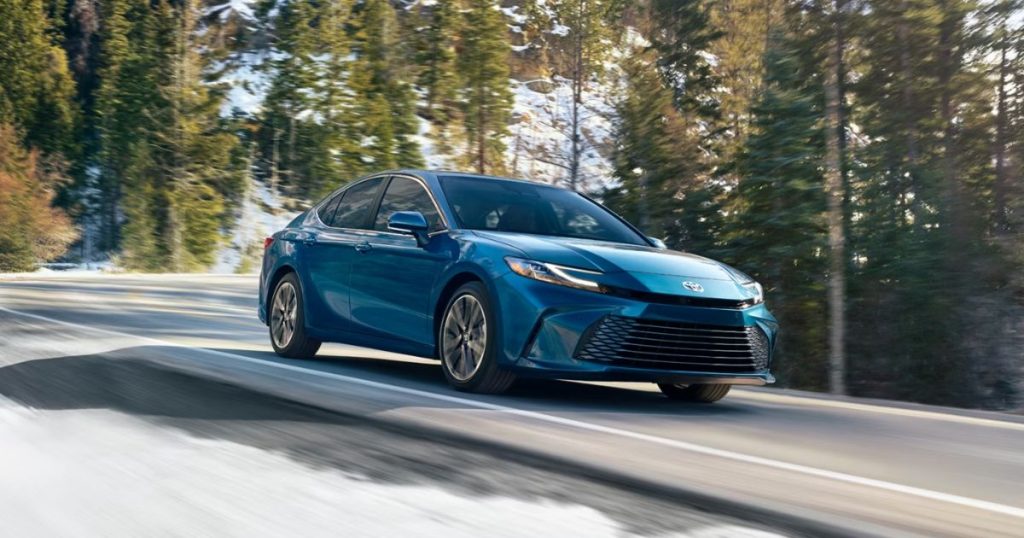
The 2026 Toyota Camry San Diego, CA represents a huge step forward as Toyota’s first all-hybrid Camry lineup. This new Toyota is a stylish and efficient sedan that saves you money and protects the environment while efficiently handling daily traffic on the I-5 and weekend coastal trips.
But what exactly makes the 2026 Toyota Camry outstanding? This guide will help San Diego drivers like you understand everything about the new Toyota Camry 2026 and why it is ideal for Southern California living.
What Makes the 2026 Toyota Camry Hybrid Perfect for San Diego Drivers
Driving around San Diego, CA requires a vehicle that can handle different driving situations. You might be commuting from National City to downtown or taking a weekend trip up the coast. No matter the situation, the 2026 Toyota Camry is built for these exact needs.
The biggest change for the Toyota Camry 2026 redesign features is that Toyota has eliminated traditional gas-only engines across the entire Camry lineup. Every single trim now uses an all-hybrid powertrain, so you can get great power without using too much gas.
With these specs, you can chase your daily thrills in style with a modern and sleek design. The 2.5-liter 4-cylinder DOHC 16-valve engine setup can give you up to 232 net combined horsepower, making it feel quick when you need to merge onto a fast freeway.
You can also expect a smooth ride in it because its sport-tuned suspension keeps you comfortable on long stretches of road or through coastal curves.
Saving Money at the Gas Pump with High MPG
One of the biggest reasons to look for a Toyota Camry San Diego, CA is the fuel savings.
The 2026 Toyota Camry Hybrid is incredibly efficient. If you choose the LE model with Front Wheel Drive, you can get an estimated 52 MPG in the city and 53 MPG on the highway. This means you spend much less time at the gas station and more time enjoying the wind in your hair as you drive along the beach.
Even if you choose a sportier trim or add All Wheel Drive, the efficiency remains high. Most other models still reach around 47 to 51 MPG. This high mileage is great for the long commutes on the I-805 or I-15, where traffic can often move slowly. The hybrid system works well in stop-and-go traffic because it can use electric power at low speeds to save fuel.
Perfect Size for San Diego Streets and Parking
The 2026 Toyota Camry interior offers plenty of room without being too large for urban parking. The sedan measures just right for fitting into downtown San Diego parking spots and navigating tight shopping center spaces. You get 193.5 inches of overall length with comfortable seating for five adults.
The trunk also provides 15.1 cubic feet of cargo space, enough for groceries, beach gear, or luggage for a weekend getaway. Despite being a hybrid, the Toyota Camry San Diego, CA models don’t sacrifice trunk space as some competitors do.
Advanced Technology and Interior Comfort
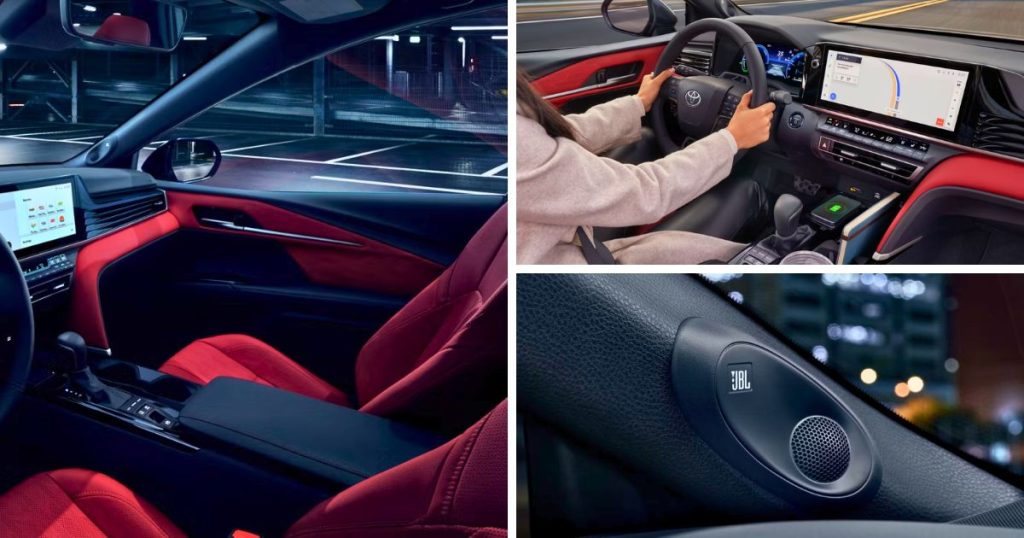
Inside the 2026 Toyota Camry interior, you will find an open concept design that feels spacious and comfortable.
The 2026 Camry also has a center console that you can configure in different ways to hold snacks or sunglasses. You can stay connected to your favorite apps through standard wireless Apple CarPlay and Android Auto.
Charging your phone is easy with five USB ports located throughout the cabin. There is also a wireless charging pad with a charge indicator light, so you can just set your phone down to get more power. If you love music and amazing sound quality, consider the available 9-speaker JBL Premium Audio system, which includes a subwoofer.
Keeping You Safe on the I-5 and I-15
Safety is a huge priority for anyone driving in a busy area like San Diego, CA.
The 2026 Toyota Camry earned a Top Safety Pick Plus rating, which is the highest honor from safety experts. This means the car did a great job in many different types of crash tests. In tests that look at what happens in a front-end hit, the car was rated ‘Good’ because the safety cage held up and protected the driver and passengers from injury.
The car also comes with Toyota Safety Sense 3.0 as a standard feature. This system includes several tools to help you avoid accidents. Some of these tools include:
- Pre-Collision System with Pedestrian Detection detects people or other cars in front of you and applies the brakes automatically if it thinks a hit might happen
- Lane Tracing Assist to keep you centered in your lane while you are driving on the highway
- Lane Departure Alert with Steering Assist monitors lane markings and alerts you if you drift, providing gentle steering inputs to keep you centered
- Full-Speed Dynamic Range Dynamic Radar Cruise Control sets your speed and following distance to match traffic flow
- Automatic High Beams automatically switch the headlights between high and low beams based on approaching traffic
These and other safety features give you more peace of mind when navigating the city’s busy intersections and freeways.
Features Built for the San Diego Climate and Roads
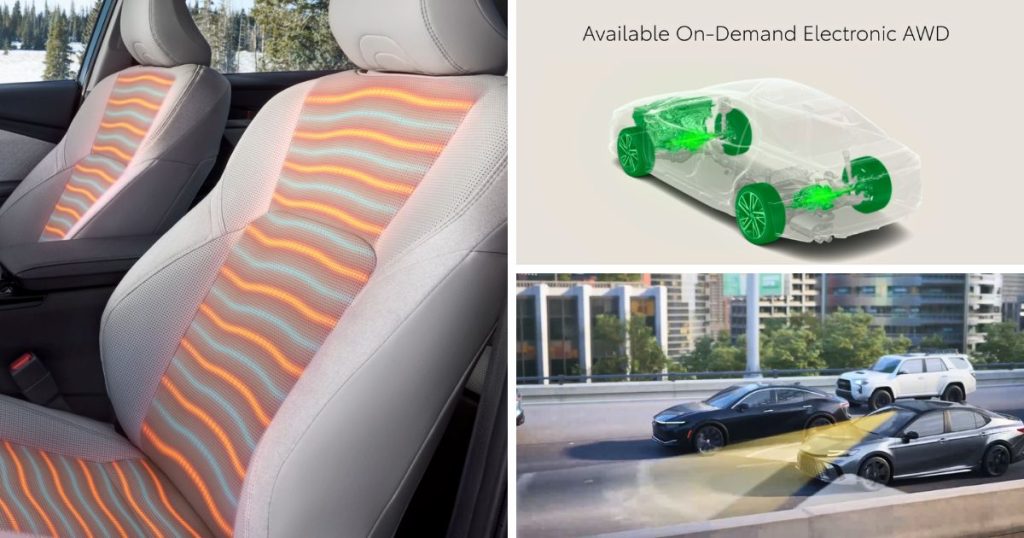
The 2026 Toyota Camry has specific tools that make life in Southern California much easier. For example, the available Electronic On-Demand All Wheel Drive is great for rainy mornings or heavy fog near the coast. This feature can sense when the front wheels are slipping and send power to the back wheels to keep grip on the road.
The dual zone climate control is a standard feature that is useful during the warm summer months in San Diego, CA. You can also get multi-stage heated and ventilated front seats on higher trims like the XLE and XSE.
If you often have to deal with heavy traffic, the Traffic Jam Assist feature takes over some of the steering and braking at low speeds on the freeway.
Quick 2026 Toyota Camry Trim Comparison for Your San Diego Lifestyle
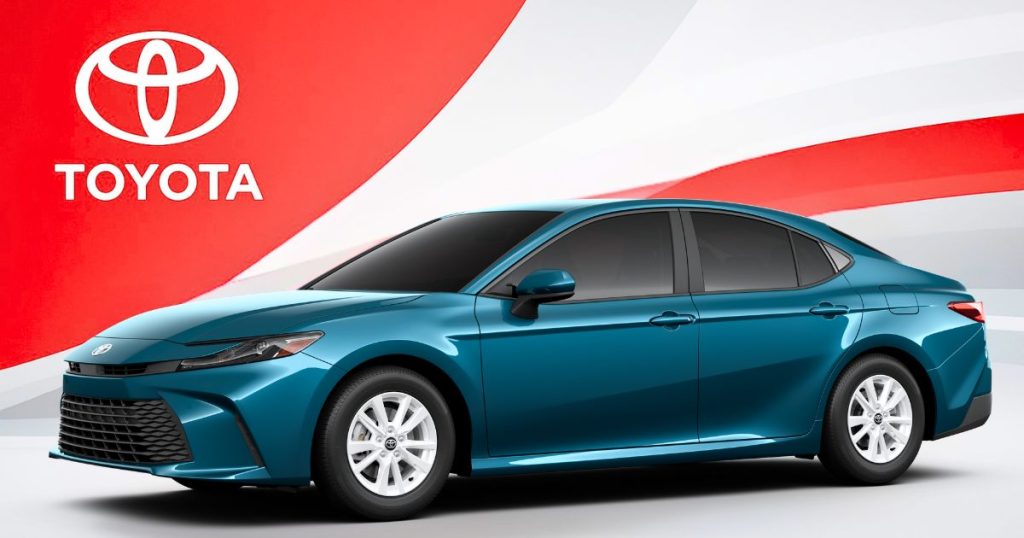
There are five main versions to choose from the latest Toyota Camry, each one offering something a little different for your needs.
2026 Toyota Camry LE for the Budget Conscious
The 2026 Toyota Camry LE is the base model, but it still comes with a lot of great features. This is the best choice if you want the highest possible gas mileage. It comes with 16-inch alloy wheels and dual-zone automatic climate control so you and your front passenger can each pick your own temperature.
It also includes an 8-inch Toyota Audio Multimedia touchscreen with 6 speakers for your music and maps.
2026 Toyota Camry SE for a Sportier Feel
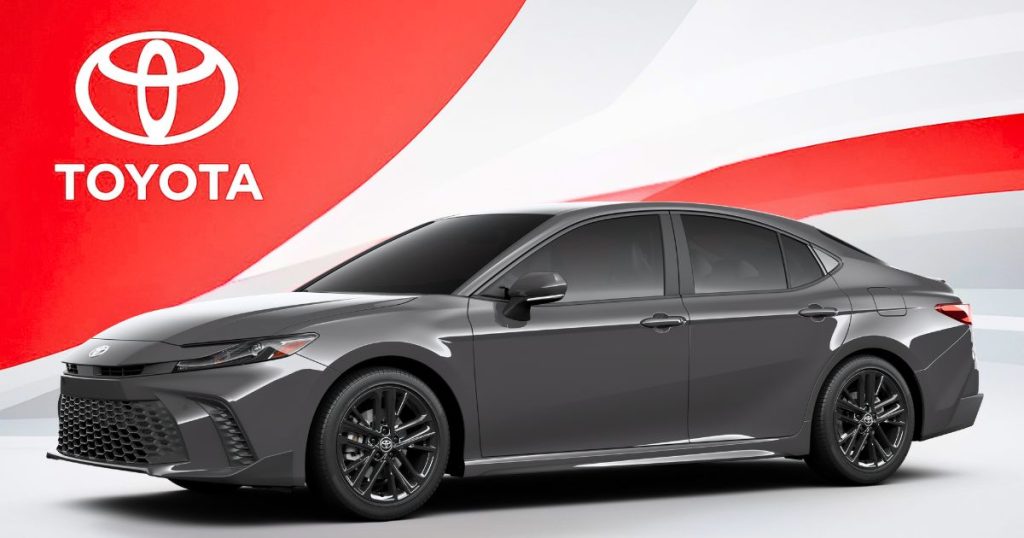
The 2026 Toyota Camry SE is for people who want a car that looks and feels more athletic. It has 18-inch black alloy wheels and a black mesh front grille that looks bold.
Inside, you will find sport seats trimmed with a special fabric called SofTex that is both comfortable and durable. The suspension is also tuned to feel a bit firmer to enjoy taking corners on winding roads.
Toyota Camry Nightshade Edition 2026 for a Bold Look
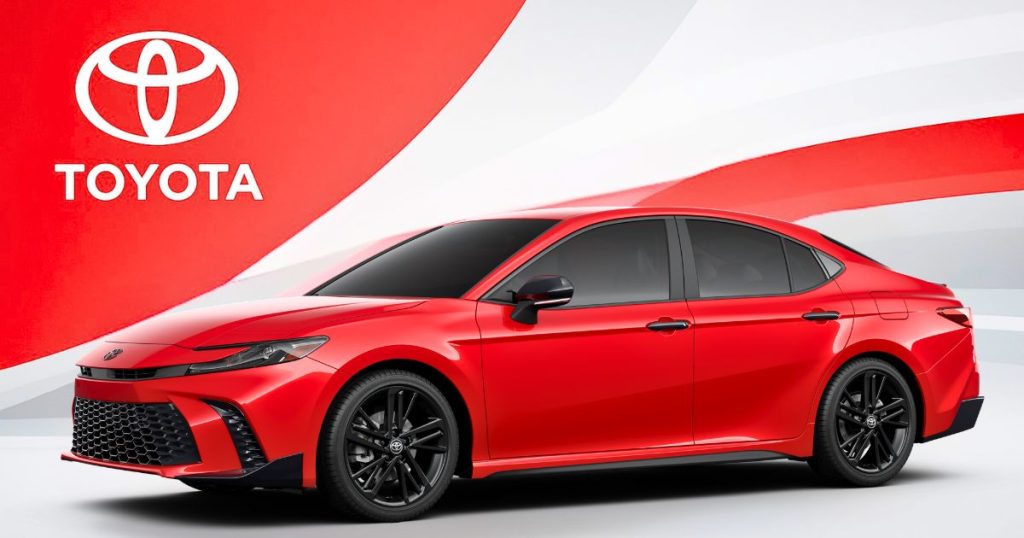
If you want to stand out on the street, the Toyota Camry Nightshade Edition 2026 is the perfect pick. This version takes the sporty feel of the SE and adds blacked-out accents.
It comes with 19-inch wheels finished in satin black and a black rear spoiler. It also has aluminum sport pedals that add to the high-performance vibe of the cabin.
Luxury and Style in the XLE and XSE
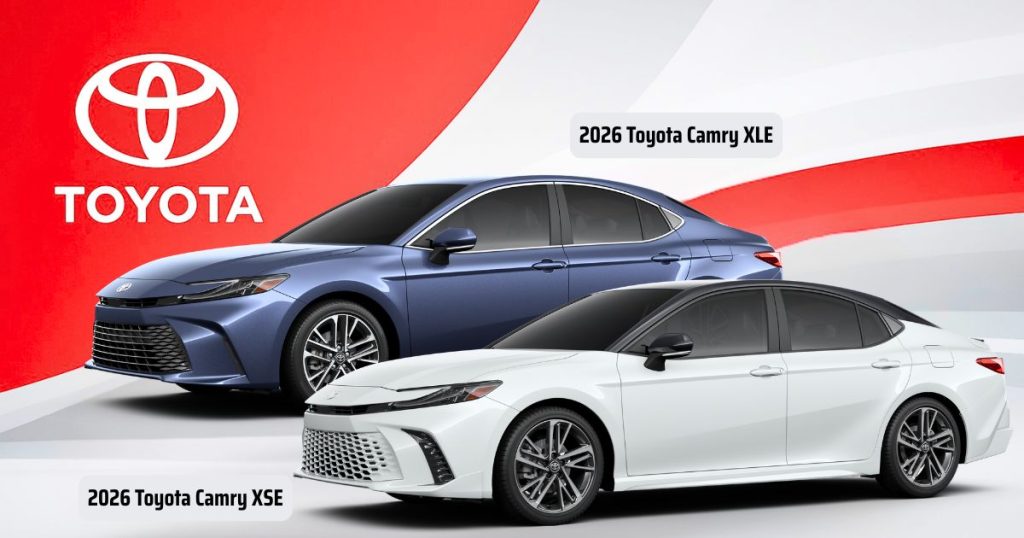
For a more premium experience, you can look at the 2026 Toyota Camry XLE. This trim focuses on heated luxury with leather and microfiber seats for those rare chilly mornings. It also has a much larger 12.3-inch touchscreen and a digital gauge cluster that puts all your important info right in front of you.
The 2026 Toyota Camry XSE is the top-of-the-line model that combines luxury with sportiness. It has 19-inch wheels with a unique gray and black finish. It also features a sport-tuned suspension, making this trim perfect for drivers who want the best of everything in their new sedan.
Finding Your 2026 Toyota Camry San Diego, CA at Dalton Toyota National City
The Toyota Camry San Diego CA drivers choose combines proven reliability with modern efficiency. The all-hybrid lineup means you get excellent fuel economy regardless of which trim you select. Advanced safety features come standard, and the comfortable interior handles daily commutes and longer trips equally well.
When you are ready to see a Toyota Camry for sale in San Diego, stop by Dalton Toyota National City. We have a wide selection of Dalton Toyota National City cars, and our expert team can help compare the different models in this newest hybrid vehicle.
Whether you want a brand new Toyota Camry 2026 or a certified used Toyota Camry San Diego, you can find the best fit for your budget.
Read Next: New Toyota Cars in San Diego, CA
TL;DR
- The Toyota Corolla vs Honda Civic debate comes down to your priorities when driving in San Diego: Corolla wins on fuel economy and value, while Civic excels in performance and tech features.
- The 2026 Toyota Corolla is the top choice for San Diego drivers who want an affordable and dependable compact sedan with a great fuel economy for city life.
- If you want to see the 2026 Toyota Corolla sedan in person, visit Dalton Toyota National City to test drive this vehicle and see how this compact car fits your lifestyle.
Also Read: Average Toyota Corolla Mileage: What San Diego Drivers Can Expect
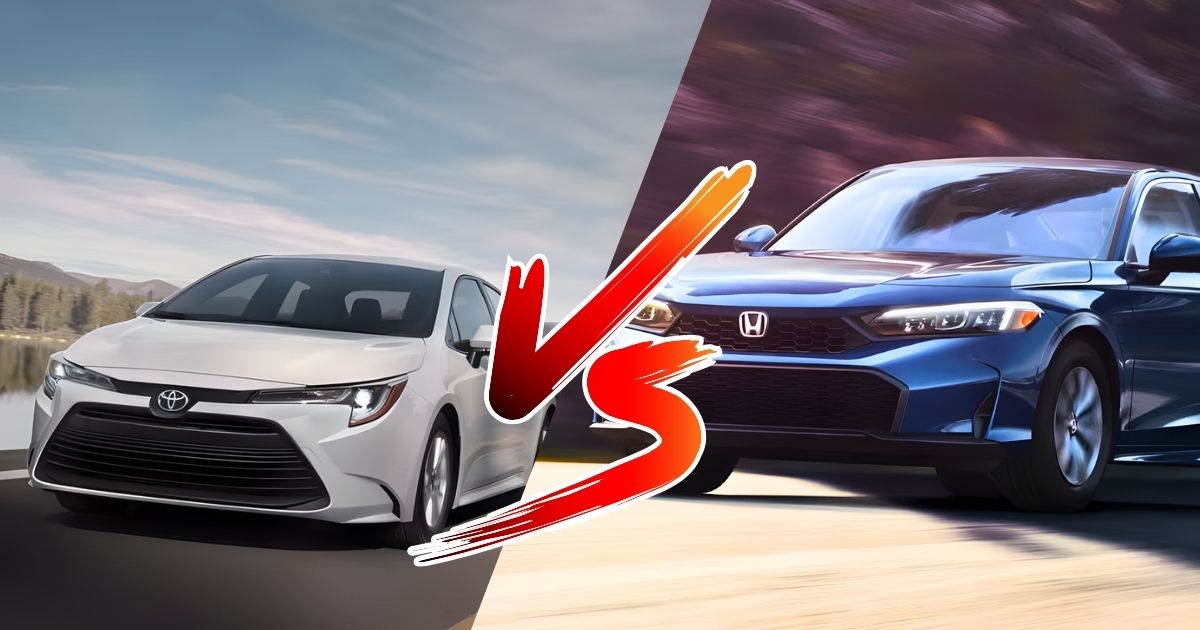
When shopping for a compact sedan in San Diego, CA, the Toyota Corolla vs Honda Civic comparison is one of the most common questions buyers face. Both the 2026 Toyota Corolla and 2026 Honda Civic are excellent choices, but they each bring different strengths to the table.
For San Diego drivers who split time between city traffic and highway commutes, understanding the Toyota Corolla vs Honda Civic specs and real-world performance will help you make the right choice. In this guide, let’s break down these differences to see which of these compact vehicles is your best match.
Engine Performance: Power vs Efficiency
The Toyota Corolla vs Honda Civic comparison starts under the hood, where these two take different approaches to performance.
The 2026 Toyota Corolla sedan uses a standard 2.0-liter engine that makes 169 horsepower and 151 lb-ft of torque. This engine is then paired with a Continuously Variable Transmission (CVT) to prioritize smooth and efficient driving.
The 2026 Honda Civic sedan, on the other hand, has a standard 2.0-liter gas engine that only makes 150 horsepower. This makes the regular Corolla feel a bit more powerful when driving around San Diego.
However, the Toyota Corolla hybrid vs Honda Civic hybrid comparison is different. The Toyota Corolla Hybrid 2026 makes 138 horsepower. The 2026 Honda Civic specs for the hybrid show it makes a massive 200 horsepower.
Thus, if you want a fast hybrid, the Civic is the winner. But if you want a hybrid that saves the most gas in the city, the Toyota Corolla wins. The Corolla Hybrid LE gets up to 53 miles per gallon in the city. The Civic Hybrid gets 50 miles per gallon in the city.
Interior Space and Comfort: Surprisingly Similar
When you compare Honda Civic vs Toyota Corolla interior dimensions, they’re closer than you might think.
The 2026 Honda Civic interior offers 99.9 cubic feet of passenger volume, while the 2026 Toyota Corolla provides 88.6 cubic feet. The Civic has more headroom and legroom in both rows, making it feel more spacious, especially for taller passengers.
Front headroom measures 39.3 inches in the Civic versus 38.0 inches in the Corolla. Rear legroom tells a different story: the Civic offers 37.4 inches compared to the Corolla’s 34.8 inches. That extra rear seat space makes the Civic more comfortable for adult passengers on longer trips.
Trunk space also favors the Civic. The 2026 Honda Civic sedan provides 14.8 cubic feet of cargo room. The 2026 Toyota Corolla sedan, on the other hand, offers 13.1 cubic feet. The difference isn’t huge, but if you regularly carry luggage, sports equipment, or shopping bags, those extra cubic feet add up.
The Civic trunk is bigger for carrying groceries and gear. But for most daily needs, the Corolla trunk has plenty of space for a few bags or a suitcase. If you need a car that is easy to squeeze into small parking spots near the beach, the Corolla is slightly shorter and easier to handle.
Both cars feature quality materials and comfortable seats. The Corolla focuses on straightforward, easy-to-use controls and a clean dashboard layout. The Civic takes a more modern approach with its low dashboard and digital displays. The Honda Civic 2026 features include available wireless Apple CarPlay and Android Auto, heated front seats, and a premium audio system.
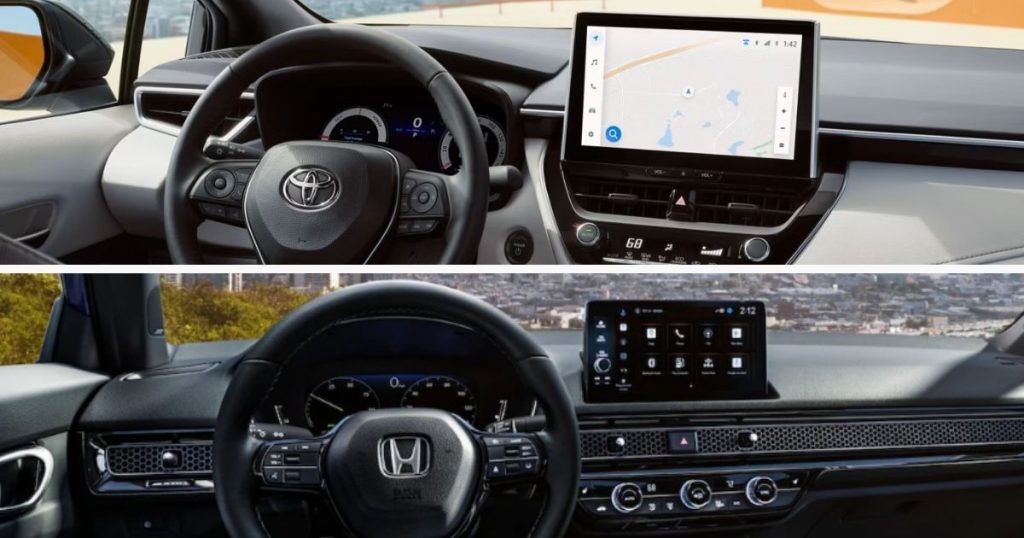
Technology and Infotainment: Modern Features Face Off
The 2026 Honda Civic specs include an available 9-inch touchscreen with wireless smartphone integration (7-inch on LX, Sport, and Sport Hybrid models). The 2026 Toyota Corolla, on the other hand, comes with an 8-inch touchscreen standard on most trims.
Both systems are user-friendly and responsive, though the Civic’s larger screen and wireless connectivity give it a slight edge in convenience.
One area where the Honda Civic 2026 features stand out is in available tech upgrades. The Honda Civic Sport Touring hybrid offers a 10.2-inch digital instrument cluster, a 12-speaker Bose premium audio system, and more USB ports throughout the cabin.
The Corolla, on the other hand, keeps things simpler but ensures all essential safety tech comes standard, even on the base model.
Safety Systems and Driver Assistance Technology
Both cars are safe and have won many awards. A Toyota Corolla vs Honda Civic comparison of safety shows that both include a full suite of tech.
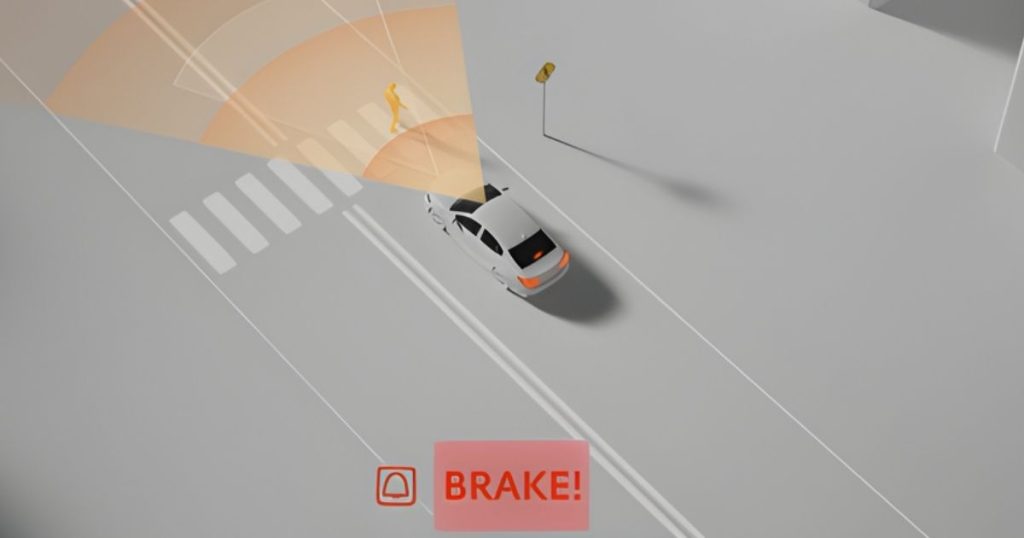
The Corolla uses Toyota Safety Sense 3.0. This system includes a Pre-Collision System with Pedestrian Detection and Lane Departure Alert with Steering Assist. It also has a feature called Proactive Driving Assist that helps you keep a safe distance from other cars or people.
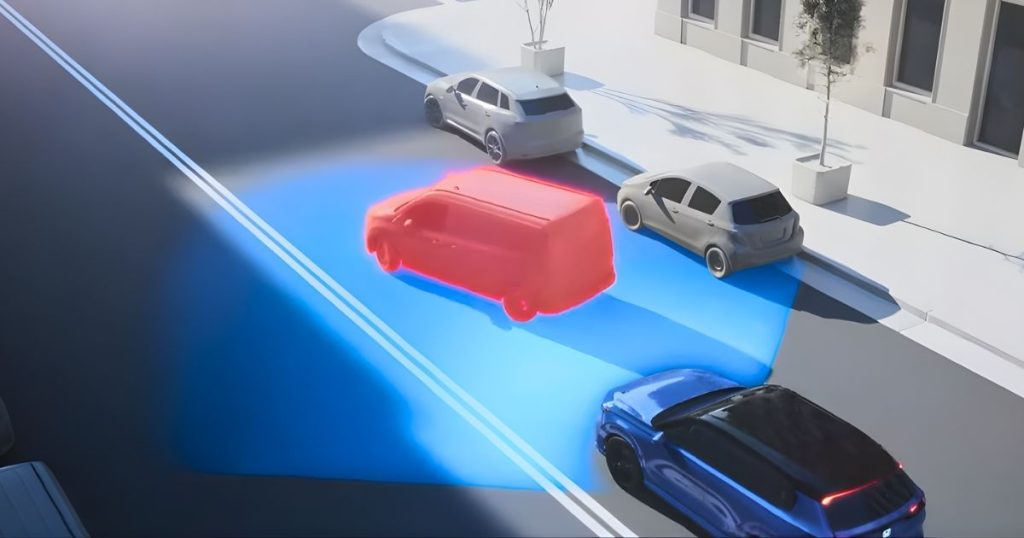
The 2026 Honda Civic specs for safety include the Honda Sensing suite. This has a Collision Mitigation Braking System and Road Departure Mitigation. It also includes Traffic Sign Recognition to help you see the speed limit on your dash.
The Corolla comes standard with ten airbags. It also has the Star Safety System to improve braking and traction.
Plus, Toyota gives you ToyotaCare, a plan that covers your factory maintenance for two years or 25,000 miles at no cost. This plan is a great way to save money on oil changes and tire rotations when you shop at Dalton Toyota National City.
Toyota Corolla vs Honda Civic: Which Compact Car is Best for San Diego Driving?
A Toyota Corolla vs Honda Civic comparison shows that while both are great, the Corolla fits the lifestyle in San Diego, CA, perfectly. It is an efficient car that handles the stop-and-go traffic on the I-5 or I-8 freeways with ease.
The 2026 Corolla Hybrid vs Honda Civic Hybrid choice is clear for city dwellers. The Corolla Hybrid gets better gas mileage in city traffic, which is where most local drivers spend their time.
When you compare Honda Civic vs Toyota Corolla, the Toyota is more focused on being a practical tool. It has a higher standard horsepower for merging onto fast highways and a smaller turning circle, making it easier to do U-turns on busy streets.
To own a compact car that is reliable, safe, and saves you money, visit Dalton Toyota National City. Our team can show you all the Dalton Toyota National City cars available so you can take a test drive and see how the 2026 Toyota Corolla LE or 2026 Toyota Corolla XSE feels on the road.
Read Next: Camry vs Corolla: Which Toyota Is Right for San Diego, CA Drivers?
TL;DR
- Toyota battery service is essential for your car to start reliably and should happen at every regular maintenance visit to prevent sudden failure in San Diego, CA. Most batteries need replacement every 3-5 years under normal conditions.
- The intense heat and humidity in San Diego, CA, can shorten the life of a Toyota battery, making regular testing and terminal cleaning necessary to avoid being stranded.
- If you are looking to get your car checked, visit Dalton Toyota National City to keep your vehicle starting strong on California roads.
Also Read: Toyota Dashboard Symbols and Their Meanings
Your Toyota’s battery powers everything from starting the engine to running the air conditioning and electronics. Hence, a reliable Toyota battery service should happen at every regular maintenance visit to make sure your car starts every time you turn the key.
San Diego drivers should pay close attention to this because local heat and humidity can make a Toyota battery wear out faster than usual. With that said, this guide covers the Toyota service schedule to follow, including warning signs your battery needs replacement, and special considerations when driving in the San Diego area.
Why Your Toyota Battery Is Critical for Daily Driving
The Toyota battery in your car does much more than just help you start the engine. It provides the initial electrical surge needed to wake up the starter and get the ignition going. Once the car is running, the battery continues to support the lights, the radio, and the air conditioner.
In modern vehicles, this part is even more vital. Modern cars use complex computers and safety systems that need a stable flow of electricity to work correctly. If the power is not steady, you might see warning lights or notice the car acting in strange ways.
A weak power source can also hurt other parts of your vehicle. When the vehicle battery is not working at its best, the alternator works harder to keep up with the electrical needs of the car. This puts extra pressure on the engine and can lead to higher repair costs down the road.
Thus, getting a regular Toyota battery service ensures that every part of your electrical system stays in good shape.
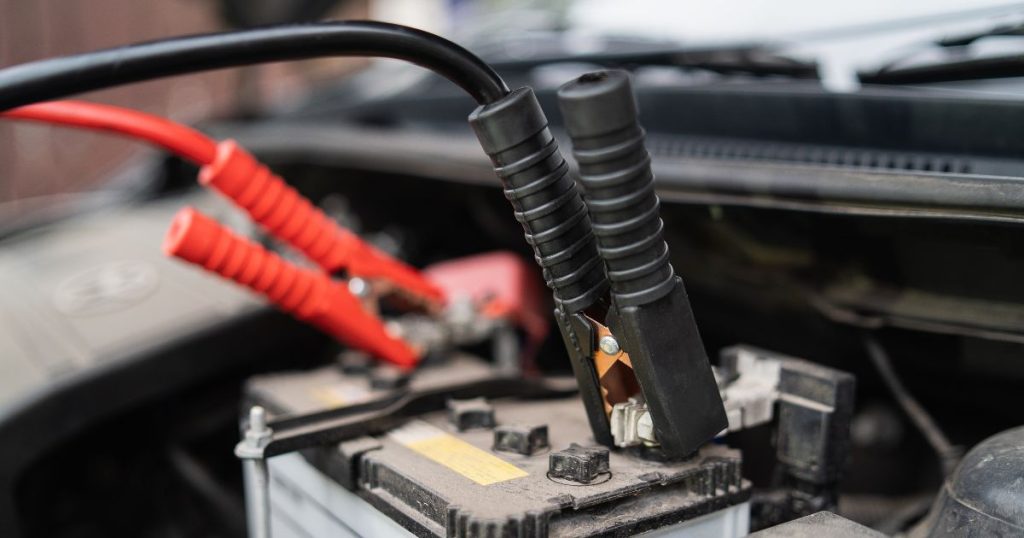
4 Key Signs Your Toyota Battery Needs Servicing or Replacement
Look for a Toyota battery service near me as soon as possible if one or more of these signs happen.
Toyota Battery Age
If your Toyota battery is 4 years or older, or if it needed a jump start recently, consider replacement. Do this even without obvious symptoms. Proactive replacement prevents unexpected failures.
Slow Engine Crank
One of the most common signs is a slow or sluggish engine crank. If it feels like the engine is struggling to roll over when you turn the key, the battery is likely weak.
This is often the first noticeable sign of a Toyota battery decline.
Electrical Issues
Another sign to watch for is dimming lights. You might notice your headlights look weak or your interior lights flicker when the engine is idling.
Electrical accessories might also act weirdly. If your radio, power windows, or air conditioner are not working as fast as they should, it is time for a checkup.
Battery Showing Physical Signs Of Decline
You should also pop the hood and look at the vehicle battery itself. If you see corrosion, stains, or a bulging case, you likely need a Toyota service battery replacement.
Important Milestones for Your Toyota Battery Service Schedule
To keep your car running well, you should follow a clear schedule for maintenance. Toyota recommends having a battery test performed at every regular service visit.
The following are the key milestones for Toyota battery service:
Every 5,000 to 10,000 Miles/6 Months
During this milestone, routine oil changes are done. However, this is also the ideal time for our technician to check the battery’s voltage and conduct a load test to assess its ability to withstand pressure.
Other than that, factory-trained technicians check battery terminals for corrosion. The battery case is also inspected for leaks or damage.
Every 12 Months
During this milestone, it is best to request a comprehensive battery load test. This test measures the battery’s ability to hold a charge and deliver adequate power. Even if the battery appears to work fine, a load test reveals its actual condition.
Every 3 to 5 Years
Most batteries have a typical life of 3 to 5 years. Even if your car is starting fine, it is smart to plan for a Toyota service battery replacement once the part reaches the four-year mark.
This is especially true in warm climates like San Diego, CA, where the heat can cause internal damage that you cannot see. If you have not used your car for a long time or if you are planning a long road trip, getting a test is a good way to avoid surprises.
Hybrid Battery Service Schedule
The Toyota hybrid battery warranty typically covers the hybrid battery pack for 8 years or 100,000 miles in most states, and up to 10 years or 150,000 miles in certain states.
While these batteries last much longer than conventional 12-volt batteries, they still require periodic inspection. Have your hybrid battery system checked annually after the warranty period expires.
Specialized Care for Toyota Hybrid Battery Service
If you drive a hybrid vehicle like a Toyota Prius or a RAV4, your needs are a bit different. These cars use a high-voltage pack to help power the electric motor. A Toyota hybrid battery service involves more than just checking a 12-volt battery.
Our technicians at Dalton Toyota National City will check cooling fans, inverter coolant levels, and battery vent channels. These parts keep the large battery pack at the right temperature.
If dust or pet hair clogs these vents, the battery can overheat and lose its ability to hold power. Regular Toyota hybrid battery service can help these packs last for 150,000 miles or even longer.
Owners of these vehicles should also know that Toyota is working on a Toyota solid-state battery for future models. This new technology could allow for faster charging and even longer life in the future.
But for now, staying on top of your current maintenance is the best way to protect your investment.

How San Diego Climate Affects Your Toyota Battery
Living in San Diego, CA, is great for people, but the weather can be tough on a Toyota battery. Our region has a mix of coastal humidity and inland heat that can cause problems.
High temperatures are especially hard on car batteries because heat speeds up the chemical reactions happening inside the case. This faster reaction can lead to a shorter lifespan for the part.
Humidity near the coast can also cause corrosion to build up on the metal terminals where the cables connect. This white or green crusty material acts like a barrier and blocks the flow of electricity.
Frequent short trips around town and sitting in heavy traffic can also be a problem. When you only drive short distances, the alternator does not have enough time to fully recharge the battery. Over time, this constant partially drained state can lead to a dead battery. Thus, look for a Toyota battery service near me to ensure your car is ready for the local weather and traffic.
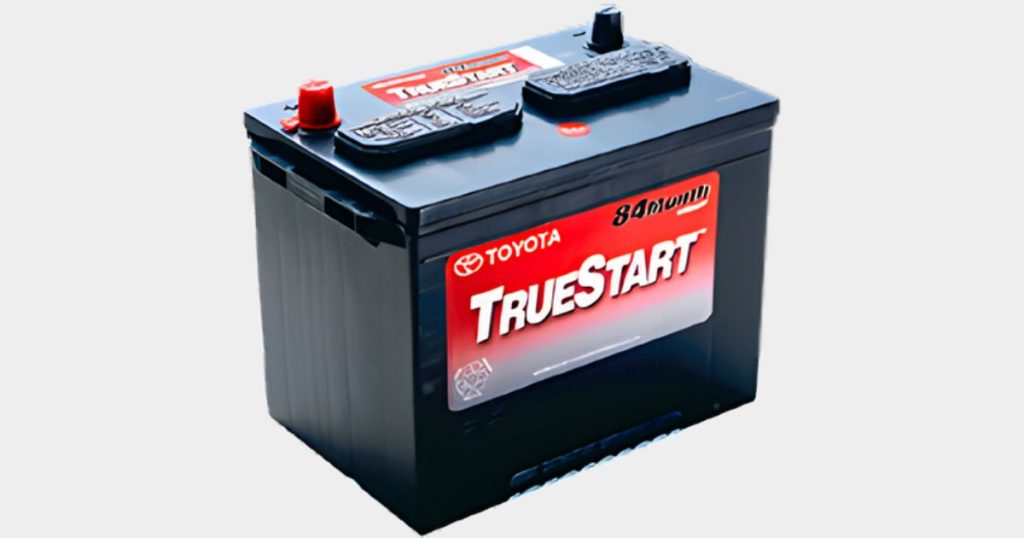
The Advantage of Using a Toyota TrueStart Battery
When it is time for a new part, many drivers choose a Toyota TrueStart battery. These are the only batteries approved for warranty repairs at over 1,200 Toyota dealers across the country.
Engineers build Toyota TrueStart batteries to the exact standards of the original design to ensure they fit perfectly in your car. These batteries offer the right mix of cold cranking amps and reserve capacity to handle different climates.
Choosing a Toyota TrueStart battery also means you get a strong warranty. Most genuine Toyota batteries come with a 24-month or more coverage, giving you peace of mind if something goes wrong.
Using the right parts helps maintain the performance of your vehicle and protects other electrical systems from damage.
Get Your Toyota Battery Service at Dalton Toyota National City Now
Maintaining a car can be expensive, but you can find ways to save. If you’re looking for the best care, Dalton Toyota National City is a great choice. Apart from having a team of experts who know every detail of your Toyota, we have the tools and training to do the job right, whether it’s just a simple test or a full Toyota hybrid battery service.
Taking advantage of Toyota battery service coupons, on top of availing ToyotaCare, a no-cost maintenance plan that covers normal factory maintenance for 2 years or 25,00 miles, can lower the costs.
Hence, drop by Dalton Toyota National City to keep your Toyota running like new. You may also check our full Dalton Toyota National City cars if you decide it is time for a new vehicle.
Read Next: New Toyota Cars in San Diego, CA
- Regular tire maintenance is the best way to keep your Toyota running safely and smoothly on the roads of San Diego CA roads. Rotating your tires every 5,000 miles helps stop uneven wear and makes your tires last much longer.
- Drivers in the San Diego area face unique conditions like heavy traffic and warm weather that can wear down rubber quickly. Sticking to a strict Toyota tire rotation schedule ensures your vehicle stays efficient and handles correctly during every trip.
- Dalton Toyota National City offers affordable Toyota tire rotation cost options, service specials, and free rotation programs that make maintaining your tires easy and budget-friendly in San Diego, CA. You can also use your rewards from the Dalton VIP program to lower your overall cost.
Also Read: Common Transmission Issues Drivers Should Watch For
“How often do I rotate my tires?” For Toyota owners in San Diego, CA, the answer affects your safety, your wallet, and your vehicle’s performance. While tire rotation should happen every 5,000 to 7,500 miles, regularly doing this not only keeps your Toyota and its handling in top shape but also protects your investment.
Let this guide break down everything about Toyota tire rotation: from understanding why it matters to finding the best Toyota tire rotation cost and service options at Dalton Toyota National City.
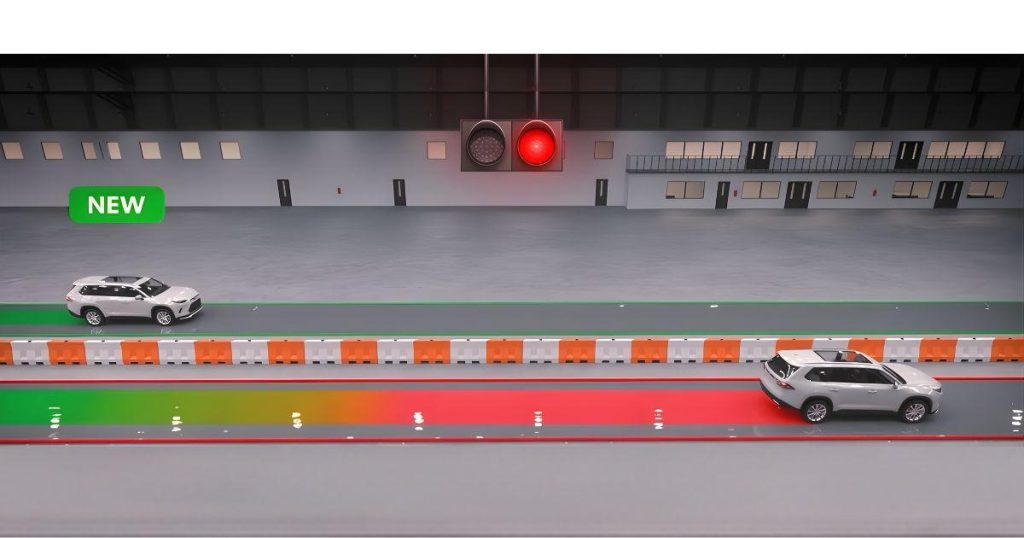
Why You Must Rotate the Tires on Your Toyota Regularly
Tires do not wear down in the same way because each wheel has a different job. The front tires usually bear more weight because the engine sits in the front of the car. They also handle all the steering and a large part of the braking force. This causes the front tread to disappear faster than the tread on the back wheels.
If you never move them, then the front tires will wear out long before the back ones. This could lead to a serious safety impact. Worn tires can:
- Double your stopping distance in wet conditions
- Cause poor handling, and eventually,
- Blowout
And in San Diego’s occasional rain, that extra stopping power could prevent an accident. Regular Toyota tire rotation also helps spot problems early (slow leaks or alignment issues) before they become expensive repairs.
When you follow a proper Toyota tire rotation pattern, you shuffle the tires to different spots so the wear stays level across all four. This helps you get the most miles possible out of your investment, aside from keeping your car quiet and stopping the steering wheel from shaking while you drive.
For Toyota drivers, rotation protects your vehicle’s renowned reliability. Models like the Toyota Camry tire rotation need to stay consistent across the lineup, making maintenance predictable and affordable.
The Standard Schedule for a Toyota Tire Rotation
Most experts suggest you check your tires during every service visit. A good rule of thumb is to perform a Toyota tire rotation together with your oil change, usually happening every 5,000 miles. Even if you don’t drive many miles in a year, you should still have a visual check performed every 6 months.
Toyota provides clear guidance on how often should you rotate your tires. The standard Toyota tire rotation schedule recommends rotation every 5,000 to 7,500 miles.
Here’s a simple schedule to follow:
Mileage Interval and Recommended Action
- At 5,000 miles/6 months: Rotate tires and inspect tread depth. Perform a visual as well if you drive fewer miles than the average. This interval works well for mixed city and highway driving.
- At 10,000 miles/12 months: Rotate and balance tires. Pair this with your oil change service for efficiency.
- At 15,000 to 20,000 miles/18 months: Rotate tires and check wheel alignment. Monitor tread depth to plan for replacement.
But different types of vehicles have different needs for how often should you rotate your tires. All-wheel drive Toyotas need more frequent attention.
The Toyota tire rotation pattern for AWD vehicles should happen every 3,000 to 5,000 miles. This is because power goes to all four wheels, creating faster, more even wear. Front-wheel drive and rear-wheel drive cars, on the other hand, can typically go 5,000 to 7,500 miles between services.
Your vehicle’s maintenance reminder system tracks mileage and alerts you when service is due—pay attention to these reminders. They’re programmed with your specific model’s needs in mind. Missing rotations shortens tire life significantly. A set that could last 60,000 miles might wear out at 40,000 without proper rotation.
Also, the Toyota tire rotation schedule also varies based on tire type. Directional tires require specific patterns, while standard tires offer more flexibility. Our service team at Dalton Toyota National City can confirm the right approach for your specific model.
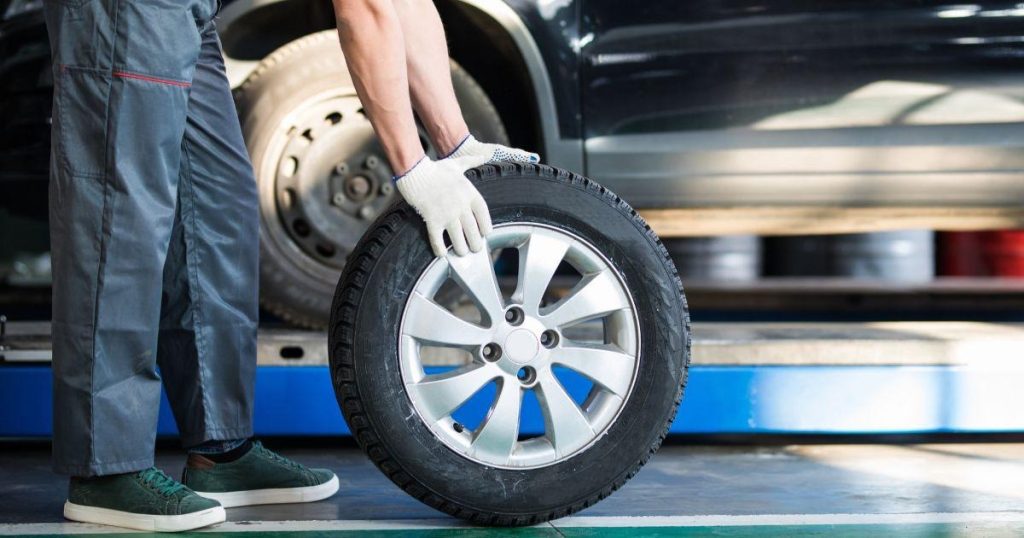
Understanding the Correct Toyota Tire Rotation Pattern
The way a technician moves your tires depends on which wheels get power from the engine.
Directional Tires
Directional tires (those with a specific rolling direction) have a straightforward pattern. Front tires move to the rear on the same side. Rear tires move to the front on the same side. The sides never cross.
Non-Directional Tires
For non-directional tires, the cross pattern works best. Front tires move to the opposite rear positions. The front left goes to the rear right, and the front right goes to the rear left.
The rear tires then move forward on the same side, creating an X pattern when viewed from above.
All-Wheel Drive
All-wheel drive vehicles use a different approach. The X pattern applies to all four tires, with each tire moving to the opposite corner. Front left goes to rear right, front right goes to rear left, rear left goes to front right, and rear right goes to front left.
Front-Wheel Drive
For a front-wheel drive car, the front tires move straight back to the rear positions. The rear tires then move to the front, but they switch sides. This means the back left tire goes to the front right, and the back right tire goes to the front left.
Rear-Wheel Drive
If you have a rear-wheel drive car, then the pattern is different. The rear tires move straight forward to the front, the front tires then move to the back and switch sides.
Using the right Toyota tire rotation pattern is essential for maintaining the balance of your wheel assembly. Think of these patterns like shuffling a deck of cards, rearranging positions to evenly distribute wear.
The good news is, you don’t have to keep track of it on your own. Our technicians at Dalton Toyota National City handle this process expertly, ensuring each tire ends up in the right position for your vehicle type.
Adjusting Your Schedule for Driving in San Diego CA
Living in a place with a mild climate like San Diego CA changes things for your car. You do not have to worry about snow or road salt, but the local conditions still affect your rubber.
The heat in Southern California can make tire rubber wear out faster than it would in a cooler place. You should look at your tires at least once every three months to check for cracks or signs of damage.
Urban traffic is another significant factor when asking, “How often do I rotate my tires?” If you spend a lot of time sitting in stop-and-go traffic on the freeway, then your tires experience more friction and heat. For these city driving conditions, you should stick to the 5,000-mile mark rather than waiting longer.
If you mostly drive on long highway trips, then you might be able to stretch that to 7,500 miles. Coastal humidity can also cause rubber to crack sooner, so keeping a close eye on it is important.
No matter what schedule your Toyota technician recommends, the key is consistency. Pick an interval that fits your driving patterns and stick to it. Many Dalton Toyota National City customers choose 6,000 miles as their sweet spot for San Diego conditions.
Signs That You Need a Tire Rotation Right Now
Sometimes you cannot wait for your next 5,000-mile appointment. You should pay attention to how your car feels while you are driving. Watch for these warning signs that demand immediate attention:
Uneven Tread Wear
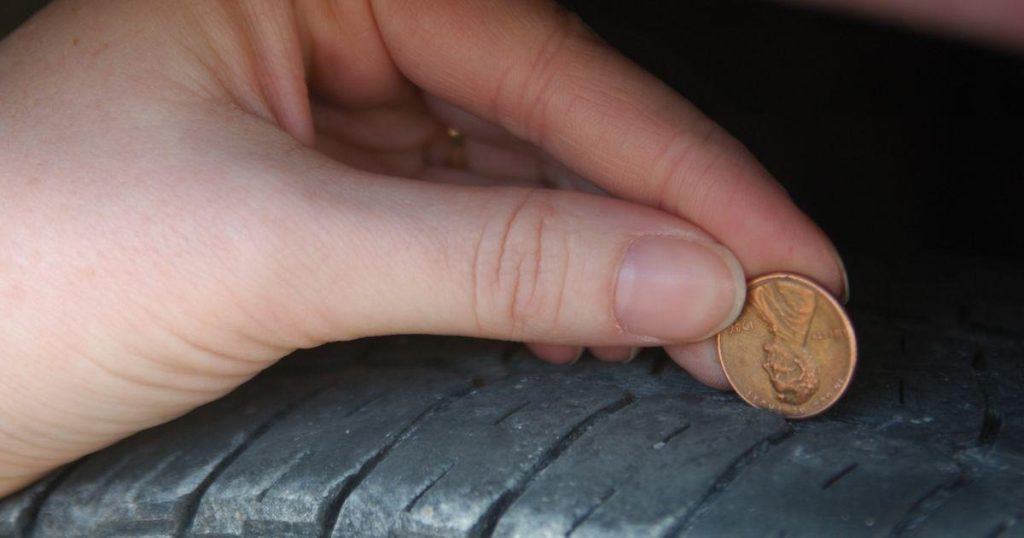
Uneven tread wear is the clearest indicator that your Toyota needs an immediate tire rotation. Check your tires using the penny test. Do this by inserting a penny into the tread with Lincoln’s head pointing down.
If you see all of Lincoln’s head, your tread is too shallow, and rotation won’t help; you need new tires. If tread depth varies significantly between tires, rotate immediately to salvage remaining life.
Vibration While Driving
Vibration while driving signals imbalanced wear. You might feel shaking in the steering wheel at highway speeds or a rough ride on smooth roads. This often means one or more tires developed flat spots or uneven patterns. Rotation combined with balancing fixes this problem.
Poor Handling
Poor handling is another red flag. If your vehicle pulls to one side, responds slowly to steering inputs, or feels unstable in turns, uneven tire wear might be the culprit. As this compromises safety, it requires quick attention.
Tire Pressure Monitoring System Lights Up
The tire pressure monitoring system (TPMS) light indicates problems. While it usually means low pressure, persistent warnings after filling tires could signal uneven wear affecting how tires hold air. Make sure to have this checked during rotation.
Don’t ignore these signs. The longer you wait, the less rotation can help. Severe uneven wear becomes permanent and forces early replacement. Acting fast saves money and keeps you safe on San Diego roads.
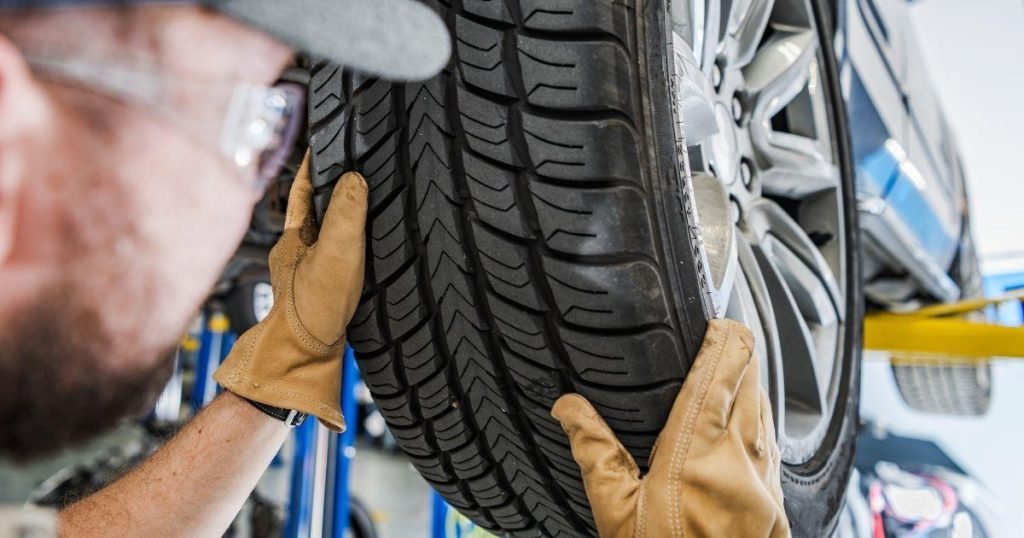
Professional Maintenance at Dalton Toyota National City
When you need help with your tires, then Dalton Toyota National City is the place to go. We have factory-trained technicians who understand exactly how your specific model should be handled.
If you are in a rush, then you can use the FasTrack Express Service. This service uses two technicians to finish your maintenance in about 30 minutes or less with an appointment.
While our technicians work on your tires, they will also perform a multi-point inspection. This includes checking your brake pad thickness and making sure all your fluid levels are correct. They will also reset your tire pressure monitor light to ensure your safety systems are working properly.
Minimizing Toyota Tire Rotation Costs at Dalton Toyota
Dalton Toyota National City cars are kept in top shape through these quick and thorough checks. But if you’re worrying about the tire rotation cost, there are many ways to save.
The Toyota tire rotation cost is often bundled with other services to make it more affordable. For example, you can find a Toyota tire rotation special that includes a conventional or synthetic oil change. Prices do vary depending on the oil your Toyota uses.
You can also look for a Toyota tire rotation coupon online to lower your bill. We usually do a price match guarantee on tires, so you know you are getting a fair deal. If you join the FasTrack Oil Change Club, then you can get two rotations and two oil changes for a set price. This is a great way to plan and save money on your Toyota Camry tire rotation or any other model you own.
But you can avail of a free tire rotation service under the ToyotaCare plan. Every new Toyota comes with this no-cost maintenance plan for the first 2 years or 25,000 miles. This covers your factory-scheduled maintenance, including the times you need a Toyota free tire rotation.
If your original plan is about to end, you can look into ToyotaCare Plus. This plan can extend your coverage for up to 5 years or 75,000 miles. We also have a Toyota Service Care for older vehicles that provides two years of maintenance and roadside assistance.
These plans are a great way to ensure you never miss a service. You can even find a Toyota service coupons tire rotation through Dalton Toyota to help with the costs.
Keep Your Toyota Running Well with Regular Care
Asking “How often do I rotate my tires?” is the first step to being a responsible owner. Whether you are driving a brand-new SUV or an older sedan, keeping the tires rotated is vital. It protects your safety and helps you save money on fuel and replacements.
Visit our team at Dalton Toyota National City to get your tires checked by the experts. We can help you set up a schedule that fits your life and your driving habits. With the right care, your Toyota will stay reliable for many years to come.
Stick to your Toyota tire rotation schedule and enjoy the peace of mind that comes with even tire wear.
Read Next: Best Trucks for Landscaping Businesses in San Diego
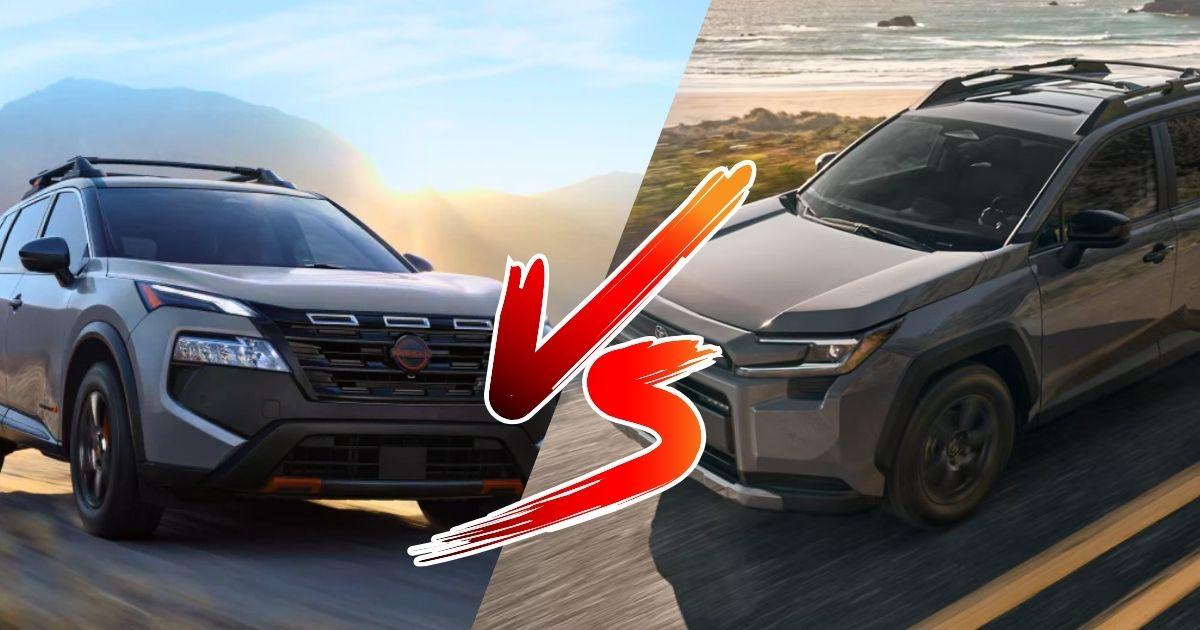
- The 2026 Toyota RAV4 is the top compact SUV choice for San Diego drivers, offering improved fuel efficiency and significantly more power than the 2026 Nissan Rogue, making it the perfect vehicle for local commutes and coastal trips.
- The 2026 Toyota RAV4 offers a more powerful engine, superior fuel economy options, including hybrid and plug-in hybrid models, and a roomier interior that accommodates everything from beach trips to mountain adventures.
- If you want to buy a 2026 Toyota RAV4 for sale or its 2025 model near San Diego, CA, visit Dalton Toyota National City today to see why it is the neighborhood favorite.
Also Read: The Ultimate Guide: Toyota RAV4 Oil Change
Choosing between the Nissan Rogue vs RAV4 is one of the biggest decisions San Diego SUV shoppers face today. But the answer is clear: the 2026 Toyota RAV4 beats the 2026 Nissan Rogue in almost every important category.
From power and space to fuel savings and resale value, the RAV4 gives you more of what matters on Southern California roads. In this comparison, let’s break down exactly why the RAV4 is the smarter choice for drivers in San Diego, CA.
Nissan Rogue vs Toyota RAV4 Efficiency and Range
Drivers in San Diego CA often have long trips on the freeway, so saving money on fuel is a top priority. When you look at the Nissan Rogue vs Toyota RAV4 gas mileage, the Toyota model takes a clear lead.
The new Toyota RAV4 2026 can reach an estimated 47 city and 40 highway MPG. In comparison, the gas-powered 2026 Nissan Rogue gets around 29 city and 36 highway MPG.
The Toyota RAV4 PHEV options show even bigger differences. The Toyota RAV4 2026 plug-in hybrid can travel up to 52 miles using only electricity*. This long range lets many people finish their daily drive without starting the gas engine.
The 2026 Nissan Rogue PHEV only reaches an estimated 38 miles of electric range. Toyota uses a larger 22.7 kWh battery pack to reach these higher numbers. Having more electric range is great for driving to the beach or through downtown without using any fuel.
Note:
* – Based on manufacturer-estimated electric driving range values
More Power Under the Hood: Toyota RAV4 2026 Performance Wins
The performance of your SUV matters when you need to merge onto a fast-moving highway. When comparing the Toyota RAV4 vs Nissan Rogue specs, the Toyota model is much more powerful.
The plug-in hybrid RAV4 delivers up to 324 combined horsepower*. This power allows the car to go from zero to 60 mph in just 5.6 seconds. As for the 2026 Nissan Rogue specs, it shows that its gas engine produces 201 horsepower. Even the new Rogue plug-in hybrid only reaches 248 horsepower.
The extra strength in the Toyota makes the drive feel more exciting and responsive. The 2026 Toyota RAV4 GR Sport trim adds even more fun. This trim includes special tuning for the power steering and suspension to help the car feel steady on sharp turns. It features 20-inch wheels with performance tires that grip the road well.
While the 2026 Nissan Rogue Platinum is a comfortable ride, it cannot match the raw speed and sporty feel of the top RAV4 models.
Note: * – Based on manufacturer-estimated net combined horsepower value
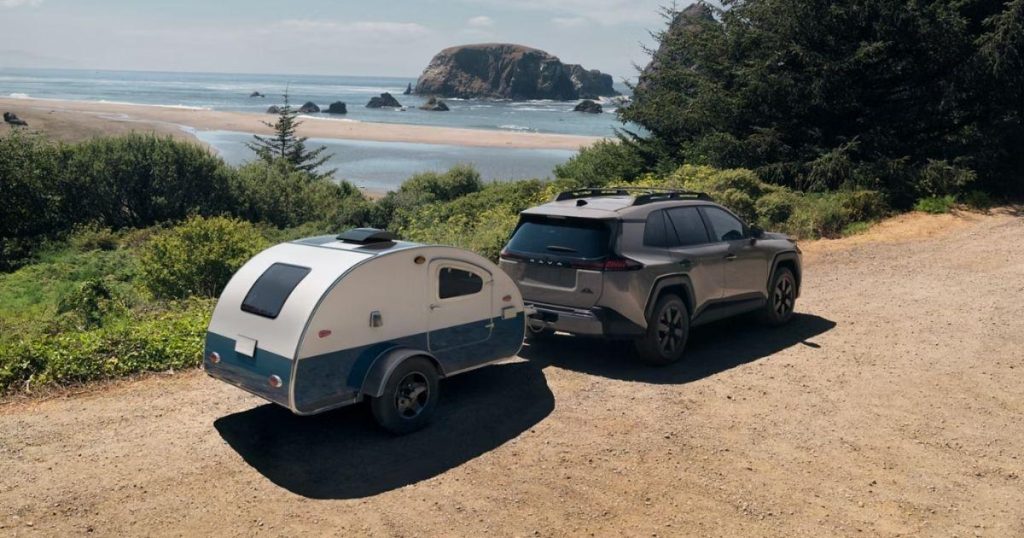
Toyota RAV4 vs Nissan Rogue Specs for Adventures and Towing
San Diego is a great place for people who enjoy the outdoors. If you like to tow a small boat or a trailer with camping gear, the Toyota is the better choice.
The Nissan Rogue vs Toyota RAV4 towing battle is not even close. The RAV4 can tow up to 3,500 pounds on several of its trims. The Nissan Rogue is limited to a towing capacity of only 1,500 pounds. The 2026 Toyota RAV4 redesign also includes the Woodland trim for those who like to drive off the main roads. This trim features a raised suspension and all-terrain tires that handle dirt and gravel with ease. It also has a strong roof rack for carrying bikes or kayaks.
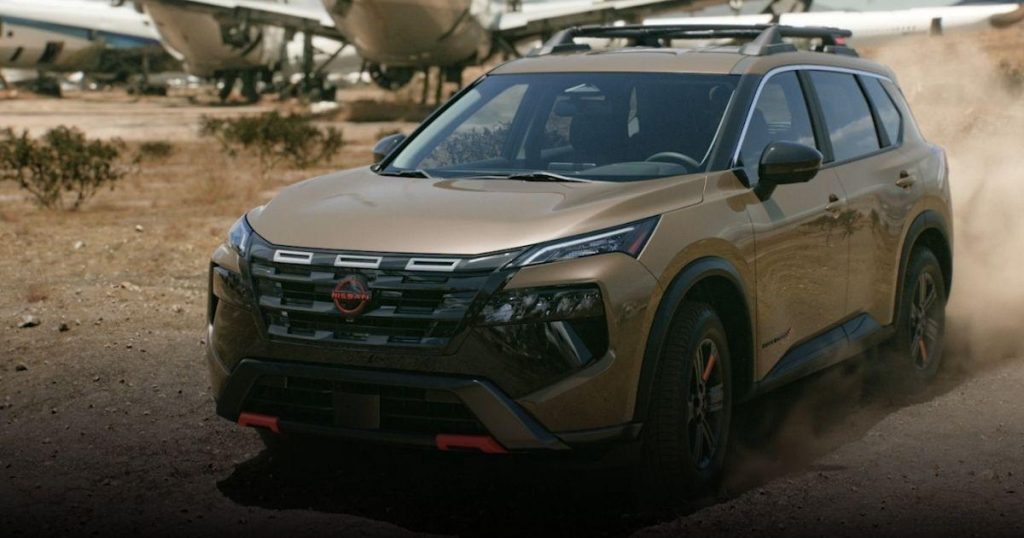
The 2026 Nissan Rogue Rock Creek is also built for light trails with its all-terrain tires and a tubular roof rack. However, the lower towing limit on the Rogue means you cannot bring as much equipment on your trip. Toyota gives you more options for your weekend escapes.
Nissan Rogue vs RAV4 Size: More Room Where It Counts
When looking at the Nissan Rogue vs Toyota RAV4 size, these two SUVs are very similar in their outside measurements.
The Rogue is slightly longer at 183 inches compared to 181 inches for the Toyota. This extra length gives the Rogue more legroom in the front seats.
However, the Nissan Rogue vs Toyota RAV4 dimensions show that the Toyota has a taller ground clearance. The RAV4 sits up to 8.5 inches* off the ground, helping the car clear obstacles on rough roads or during heavy rain. Cargo space is another important factor in the Nissan Rogue vs Toyota RAV4 size comparison. The Rogue has a larger maximum cargo space of 72.9 cubic feet when you fold its back seats. The Toyota RAV4 has about 69.8 cubic feet of maximum space.
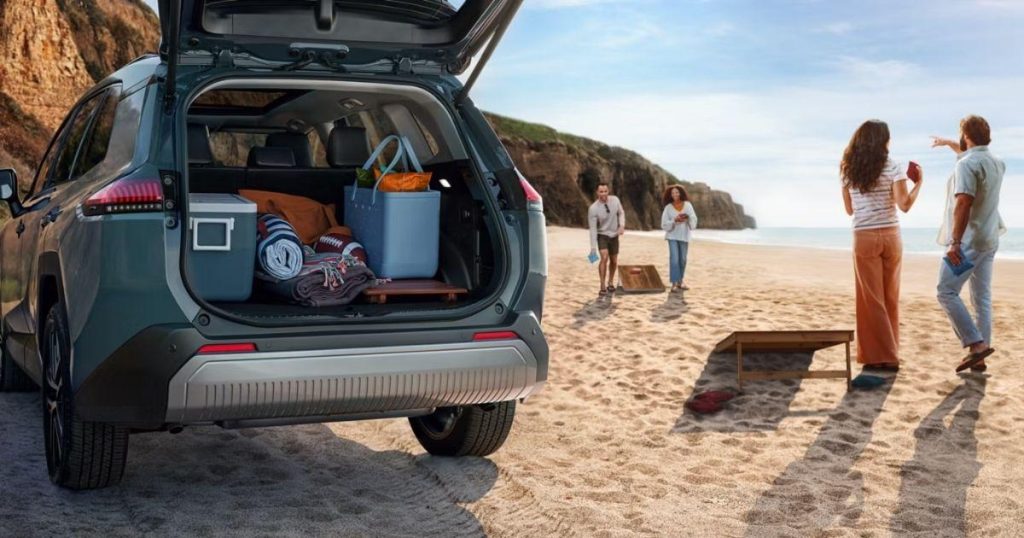
While the Rogue can hold more big boxes, the RAV4 has 37.8 cubic feet of space behind the rear seats. This is more room for groceries and bags when you have passengers in the back.
Note: * – Based on the 2026 Toyota RAV4 Woodland trim values
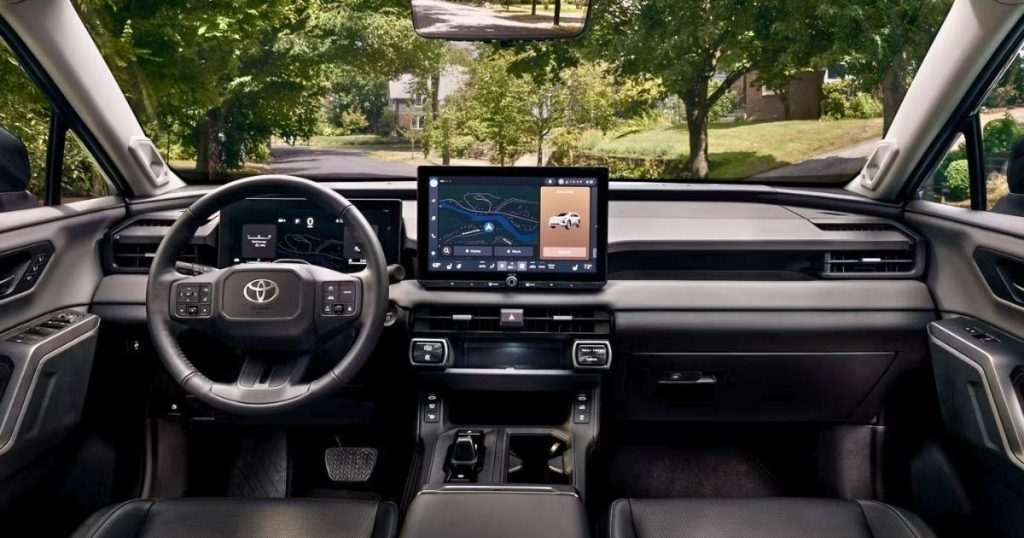
Inside the 2026 Toyota RAV4 Interior and Tech
The 2026 Toyota RAV4 interior is designed to be useful and high-tech. It features a standard 12.3-inch digital gauge cluster that puts your speed and maps right in front of you. Higher trims include a large 12.9-inch touchscreen display* with voice commands to control the radio and navigation hands-free. One very cool feature in the RAV4 is the 1500-watt power outlet in the cargo area. You can use this to plug in a coffee maker or an air pump while you are at the park or the beach. The RAV4 also offers dual wireless chargers** so two people can charge their phones at the same time.
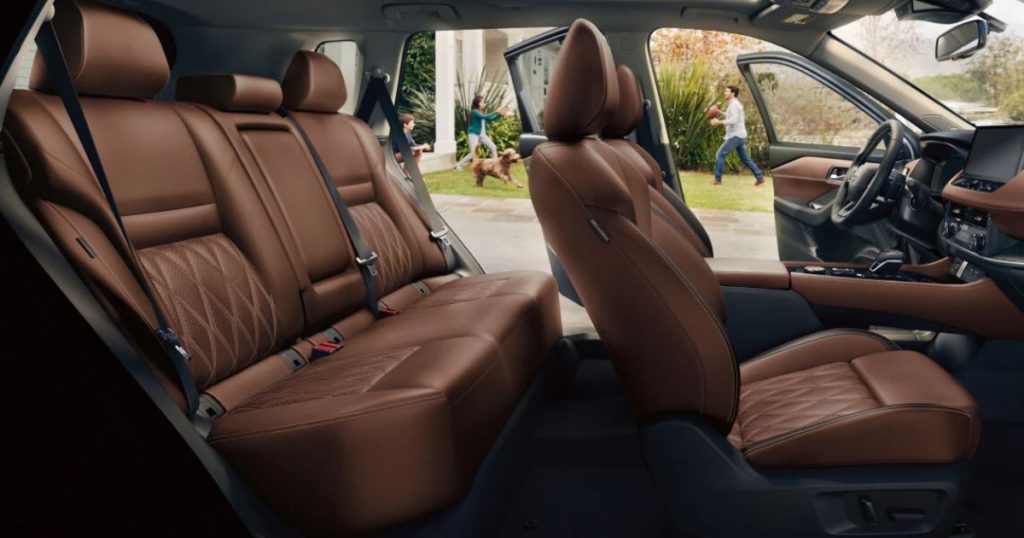
The 2026 Nissan Rogue SV and other trims offer nice technology, too. The Rogue features Zero Gravity seats that are very soft and comfortable for long drives. But the practical tools in the Toyota cabin make it a better fit for active families.
Note:
* – Starts with the 2026 Toyota RAV4 XSE trim *
* – Available only in the RAV4 Limited trim
Safety First on Busy San Diego Freeways
Safety is a huge concern when driving in heavy traffic. When you compare Nissan Rogue vs Toyota RAV4, both cars have excellent safety scores.
The 2026 Nissan Rogue comes with Safety Shield 360. This system includes tools like automatic emergency braking and blind spot monitoring. The Rogue also offers ProPILOT Assist 2.1, which allows for hands-free driving on some highways.
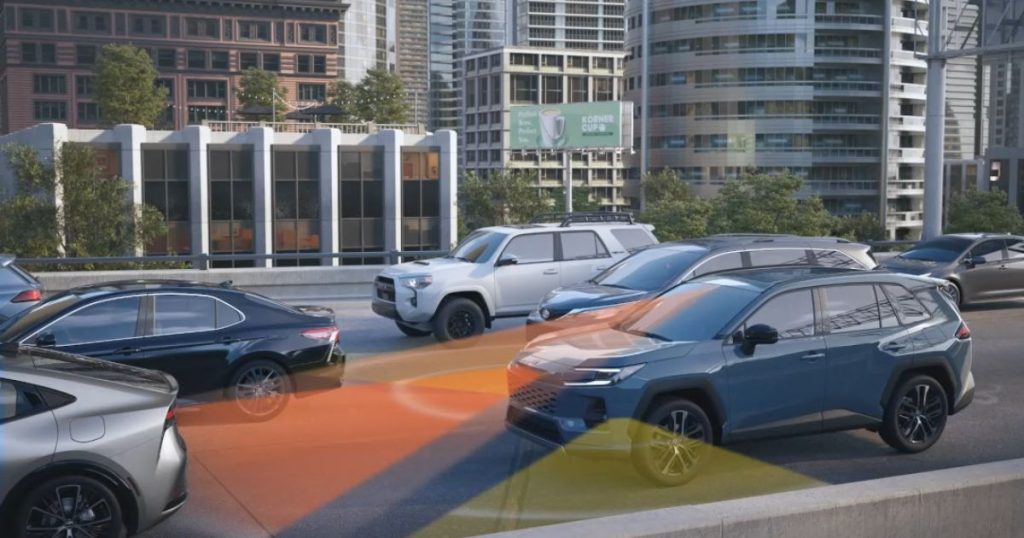
The Toyota model moves ahead with the new Toyota Safety Sense 4.0, the most advanced safety suite from the brand. It features a tool called Traffic Jam Assist that helps steer and stop the car in slow traffic under 25 mph, a massive help during rush hour on the 805 or the 5 freeway.
The RAV4 also includes a Panoramic View Monitor with 3D 360-degree Overhead View showing everything around your car while parking. Toyota has a long history of making cars that stay safe and hold their value for a long time.
Why the Toyota RAV4 is the Best Choice for San Diego
The question of Nissan Rogue vs Toyota RAV4 which is better has a clear answer for local drivers. The Toyota RAV4 is the winner because it fits the California lifestyle so well.
It provides the power you need for the highway and the efficiency you need for high gas prices. With more than double the towing capacity of the Rogue, it is ready for any adventure. Based on the Toyota RAV4 vs Nissan Rogue specs, Toyota has invested more in a high-performance hybrid powertrain.
The Nissan Rogue offers a great car for people who want a quiet and comfortable cabin with lots of legroom. But for those who want a car that can do everything from commuting to mountain climbing, the RAV4 is the king. It is a reliable and strong vehicle that will serve your family for many years.
The Clear Winner for San Diego Roads: RAV4 Takes The Crown
In the end, the Nissan Rogue vs RAV4 debate is won through better engineering and more power. The new Toyota RAV4 2026 is a technical marvel that offers things the Rogue just does not have.
Between the massive electric range and the huge towing capacity, it is the most versatile SUV in its class. It can handle everything from the city streets to the desert trails with total confidence.
Stop by Dalton Toyota National City to check out their inventory of new Toyota cars and certified used Toyotas. Our Dalton Toyota team can explain the different trim levels and hybrid options available, whether you’re a solo commuter or a busy parent.
Don’t settle for less when you can drive the car that rules the road.
Read Next: Toyota Dashboard Symbols and Their Meanings
- San Diego CA has several car dealerships that trade cars and make the process simple and quick for local drivers.
- Dalton Toyota National City stands out with instant cash offers, competitive Toyota trade-in car values, and special programs that help you get the most money.
- To get into a new vehicle today, visit Dalton Toyota National City in San Diego County to see how easy trading can be.
Also Read: Why Toyota Coolant Is Essential for Your Engine
Trading a vehicle in San Diego CA is a smart way to move from your old ride into something fresh without the stress of selling it yourself. Many drivers find that car dealerships that trade cars provide a much faster experience than trying to find a private buyer on their own.
The good news is that several dealerships in the San Diego area make this process incredibly easy. From getting instant offers to working with knowledgeable staff who handle all the details, this guide will walk you through the best options in San Diego CA, showing you how to get top dollar when trading in your Toyota vehicle.

Why Trade Your Car at a Dealership
Many drivers wonder if they should sell their car themselves or trade it in at a dealership. While selling privately might sometimes get you a bit more money, the convenience of working with dealerships that trade in cars often wins out.
You save time, avoid safety concerns from meeting strangers, and get the paperwork handled by professionals. When you trade in your car, the dealership takes care of everything. They handle the title transfer, pay off any remaining loan balance, and subtract your trade value from your next purchase.
Plus, you also get a tax benefit in California. You only pay sales tax on the difference between your new car’s price and your trade-in value.
Understanding the Trade-In Process in San Diego CA
The way car dealerships that trade cars work is quite simple for the average driver. You bring your current vehicle to a dealership like Dalton Toyota National City, where our professionals look it over. They check the condition of the engine, the look of the paint, and how many miles you have driven it. After this check, they give you an offer that you can use as cash or as a down payment on a different vehicle. This helps lower the amount of money you need to borrow for your next purchase.
Dalton Toyota National City: A Top Choice
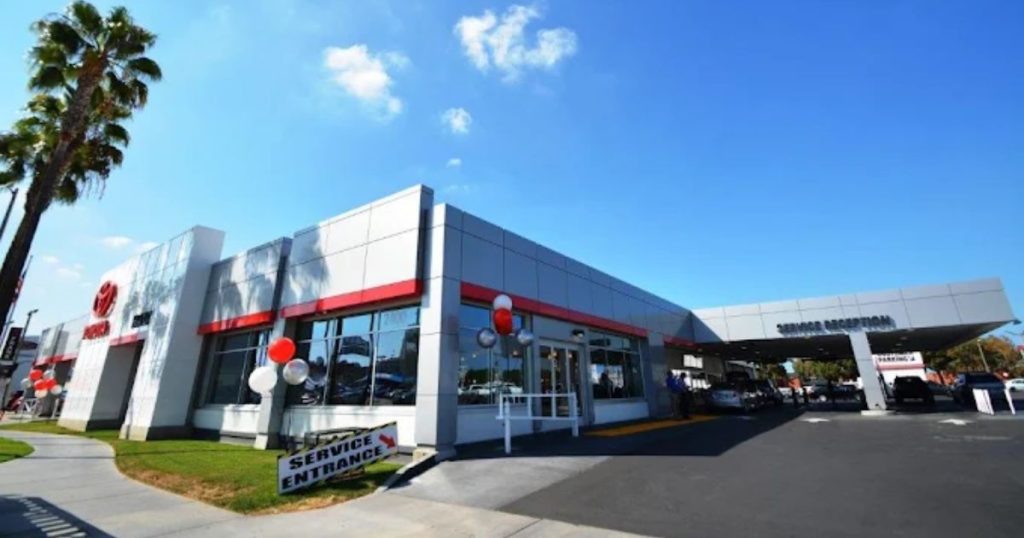
If you are looking for car dealerships that trade cars, Dalton Toyota National City is a great place to start your journey. Our dealership has been serving the community since 1996, focusing on making the car-buying journey a memorable one through exceptional service and support.
Our team at Dalton Toyota National City ensures you have a simple and exciting experience from the moment you arrive. One of these ways is offering an instant cash offer program that lets you get a real value for your car in minutes. You can start the process online from home or visit their showroom to speak with their team.
Dalton Toyota National City is also a dog-friendly dealership. Visiting dogs can even get a free Pet ID tag at the reception desk while their owners look at Dalton Toyota National City cars. This makes the experience feel less like a chore and more like a visit with neighbors.
Beyond trade-ins, Dalton Toyota National City offers excellent Toyota lease deals, so you get into a newer vehicle with lower monthly payments. Our current Toyota lease specials cover popular models and change regularly to give customers the best options.
We also take pride in helping local groups like Rady Children’s Hospital and Big Brothers Big Sisters of San Diego County. When you choose a Toyota trade-in car path here, you are supporting a business that cares about the local area.
Popular Toyota Lease Options
If you’re trading in your car and considering a Toyota lease, you’ll find plenty of attractive choices. Toyota leasing is popular since it allows you to drive a new car every few years. Plus, the payments are lower than buying.
The Toyota RAV4 lease is one of the most requested options in San Diego CA. This compact SUV gives you room for the family plus good gas mileage. Many dealerships offer Toyota RAV4 lease specials that include low down payments and competitive monthly rates.
For truck lovers, the Toyota Tacoma lease deals are worth checking out. The Tacoma is perfect for San Diego’s outdoor lifestyle and handles everything from beach trips to mountain adventures. You can often find Toyota lease promotions that make this capable truck more affordable.
Smaller households might prefer the Toyota Corolla lease for its excellent fuel economy and reliability. The Toyota Camry lease offers more room and a smoother ride while still being practical.
For those interested in electric options, the Toyota BZ4X lease brings zero-emissions driving to San Diego streets. These Toyota BZ4X lease deals can make going electric surprisingly affordable.
Work truck needs? The Toyota Tundra lease gives you full-size capability with Toyota’s legendary reliability.
Whichever model interests you, lease deals Toyota offers through local dealerships can fit various budgets and driving needs.
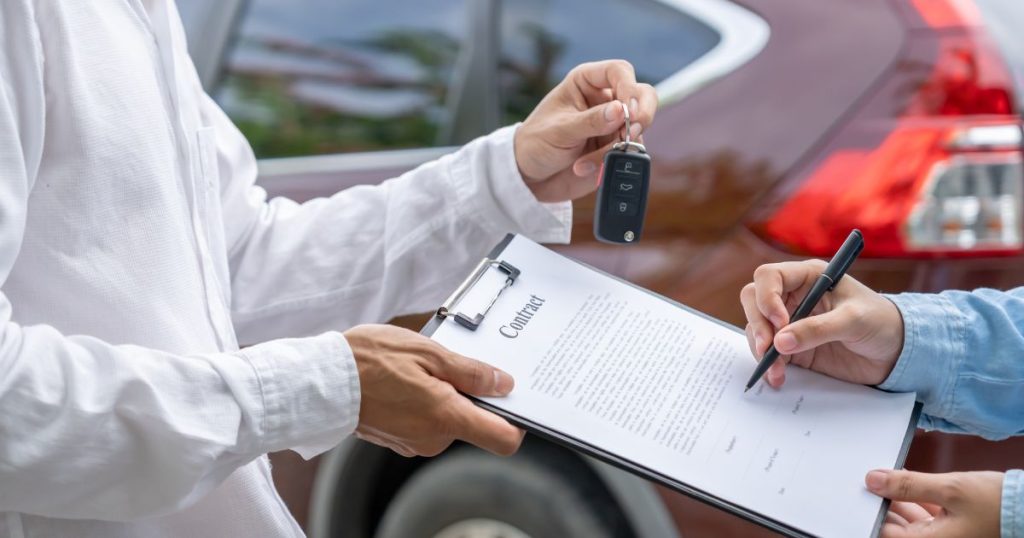
Tips for Getting the Best Trade-In Value
To get the best price from dealerships that trade in cars, you should do a little homework first.
- Research your car’s value on sites like Kelley Blue Book to know what to expect.
- Clean your car inside and out and make minor repairs before the appraisal. Having your title, registration, and maintenance records ready will make the process go much faster.
- Ask questions about the offer when visiting car dealerships that take trade ins. You can compare offers from a few different places to make sure you are getting the best deal for your situation.
- Gather all your maintenance records. Having proof of regular oil changes and service helps demonstrate your car’s value.
- Use online tools to research your car’s worth before your visit. This gives you a realistic idea of what to expect.
- Be honest about any problems or damage. Trying to hide issues usually backfires when the dealer inspects your vehicle. Most dealerships appreciate honesty and will still make fair offers even if your car needs some work.
Remember that Toyota and other popular brands are in high demand in San Diego CA. This often means you can get a better price for them. Following these steps will help you move from your old keys to cash or a new ride with confidence.
Final Thoughts on Trading Cars in San Diego County
Choosing Toyota trading is about more than just getting a new car. It is about getting a vehicle known for reliability and style. Places like Dalton Toyota National City provide the expertise and friendly service to make it happen quickly. After all, the goal of these car dealerships that trade cars is to help you drive home in a vehicle you love.
Through using tools like the payment calculator and trade-in appraisal, you can plan your future with ease. San Diego CA is a beautiful place to drive, and having the right vehicle makes every trip better. Take the time to explore the Dalton Toyota National City cars available and see which one fits your needs.
Your next adventure is just a trade-in away.
Read Next: The Ultimate Guide: Toyota RAV4 Oil Change
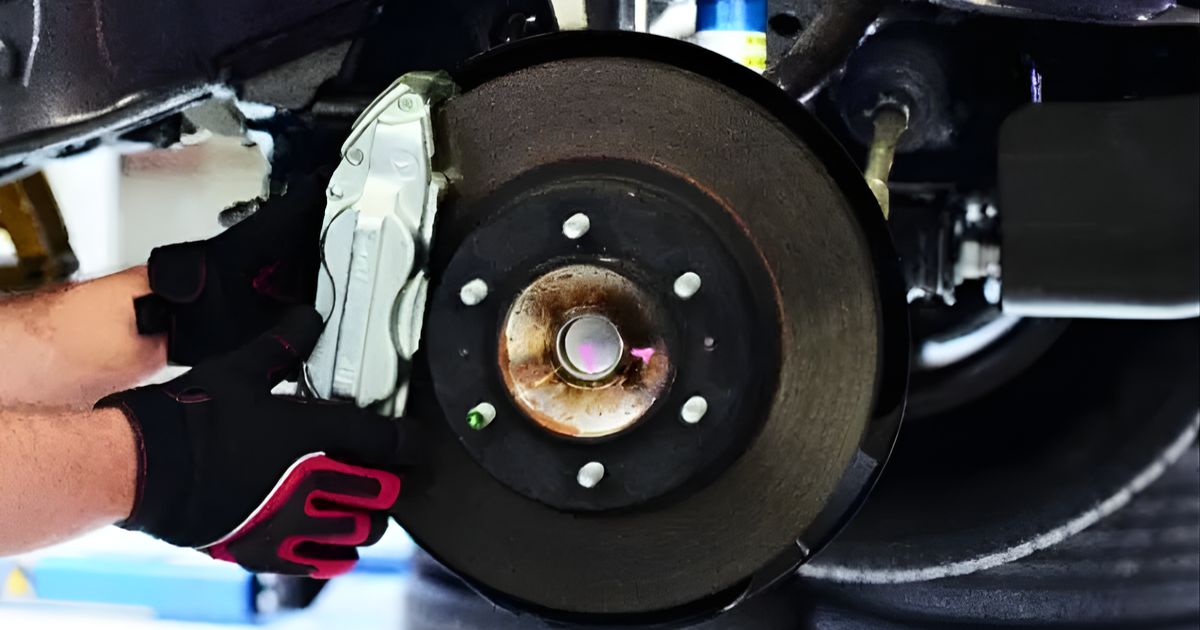
- A grinding sound when braking in your Toyota is a major safety warning that metal parts are rubbing together and need immediate attention from experts.
- Major issues include worn out brake pads, a warped disc brake rotor, and calipers sticking on brakes that lower your stopping power and lead to expensive repairs.
- If you hear a grinding sound when braking at low speeds in San Diego CA, visit Dalton Toyota National City today to keep your vehicle safe.
Also Read: Toyota Dashboard Symbols and Their Meanings
If you are driving around the busy roads in San Diego CA, you depend on your car to stop quickly and safely. A grinding sound when braking is a signal that something is very wrong under your wheels because healthy Toyota brakes are usually quiet and smooth.
When a car makes a grinding sound when braking, it often means that the protective material on the pads is gone. This leads to metal parts rubbing against each other. Don’t ignore this noise. Find out what causes these grinding noises in your Toyota and why you should have it fixed at Dalton Toyota National City now.
What That Grinding Noise In Your Toyota Means: 7 Reasons
When you press the pedal, a system of parts works together to slow your wheels. If a car makes a grinding sound when braking, the friction material is likely missing. You might hear a grinding sound when braking at low speeds as you pull into a parking spot or a driveway, a sound that is often harsh and metallic.
These instances can happen because of simple wear or because of a mechanical failure. And, in the San Diego CAarea, salt in the air and moisture can also play a role in how your brakes sound and feel. Regardless, here are some common causes why you can hear that grinding noise when braking in your Toyota.
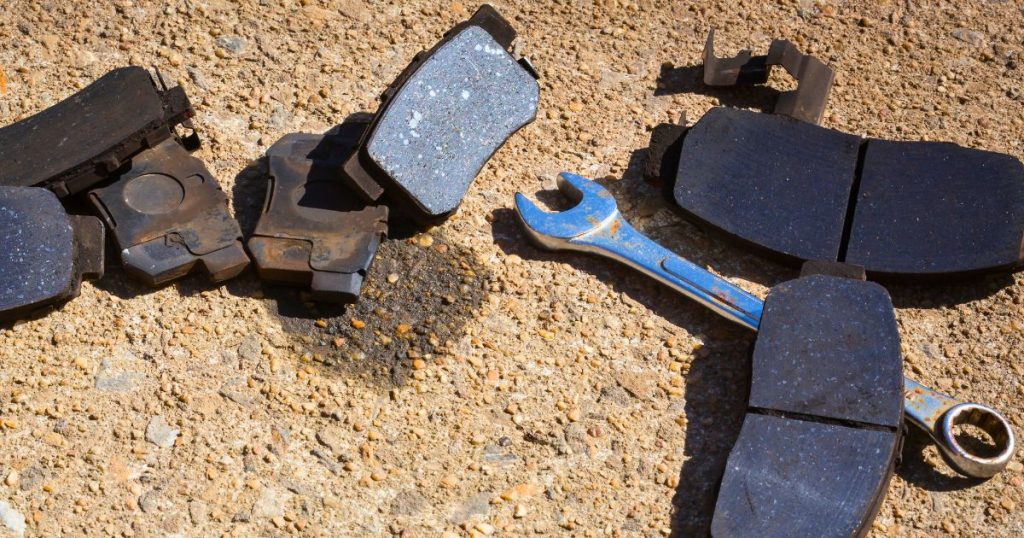
1. Worn Out Brake Pads Are the Top Culprit
The most common reason for a grinding sound when braking at low speeds is worn out brake pads. Brake pads have a thick layer of special material that grips a metal disc (rotor) behind your wheel, slowing your car down. Over time, this material becomes increasingly thinner.
Hence, when your brake pads wear down, the metal backing of the pad touches the rotor. This metal-on-metal contact is what causes the grinding noise as you brake. But, you should look for worn out brake pads symptoms long before the grinding starts.
Signs of worn out brake pads include:
- Squealing sound
- Grinding noise
- Longer stopping distances (slow response when you try to stop)
- Brake pedal feels different when pressing on it (if you push the pedal further down than usual, pads might be too thin)
- Vibrating steering wheel
- Car pulls to one side
- Dark dust on your wheels
Worst-case scenario, you’ll lose most of your stopping power. Thus, driving with a brake pads worn out situation is dangerous for you and everyone on the road.
2. Squealers and Early Warnings
Toyota designs their parts to warn you before things get dangerous. Many pads have squealers on brake pads, which are small metal tabs. When the pads get low, these squealers on brake pads touch the rotor and make a high-pitched squeal. This is the first of many signs of worn out brake pads. If you ignore it, the squeal will turn into a loud grind. Once the brake pads worn out, the damage to your car increases every time you stop.
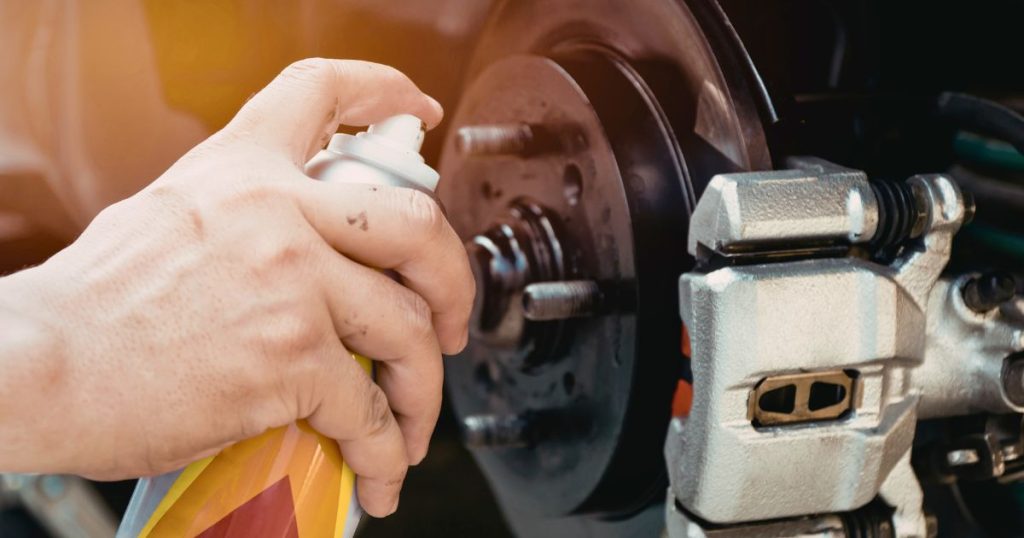
3. Warped Brake Rotors Create Problems Too
Sometimes the grinding isn’t from the pads at all. A warped brake rotor can also cause strange noises and vibrations. The rotor is the large metal disc that spins with your wheel. If this disc is not perfectly flat, you have a warped disc brake rotor, which can develop high and low spots on the surface.
What causes brake rotors to warp? Heat is usually the main factor, brought about by heavy or hard braking for long periods. Hard braking creates a lot of heat. If you continue driving while the rotors are still hot or drive through deep water after a long trip, the quick temperature change can cause the metal to change its shape, hence the warping.
Sometimes, rotors just wear unevenly over time. No matter the reason, a warped brake rotor causes a lot of trouble. Warped brake rotor symptoms include:
- Pulsing feeling in the brake pedal
- Steering wheel vibrations as you brake
- Grinding noise
If you try to fix warped brake rotors by just changing the pads, the problem will stay. You need a professional warped brake rotor repair to ensure the surface is flat again, using special tools to make the rotor smooth again. But if the warped disc brake rotor is too thin, the only way to fix it is to install new ones.
4. Issues With Sticking Calipers
Brake caliper sticking is another source of grinding noises. The brake caliper is like a clamp that squeezes the brake pads against the rotor when you press the pedal. Inside the caliper, some pistons push the pads. When everything works right, these pistons release when you take your foot off the brake.
But, if you have a brake caliper sticking, it creates massive heat and can lead to a grinding sound when braking at low speeds. Common sticking brake caliper symptoms include:
- Smell of burning rubber
- Hot wheel
- Car pulling hard to one side, even when you’re not braking
These sticking brake caliper symptoms mean the parts are seized. Rust or old grease often causes calipers sticking on brakes and can lead to reduced fuel economy.
You should never drive if you suspect calipers sticking on brakes.A brake caliper sticking fix is necessary to prevent a fire or a total brake failure. A mechanic will check the slide pins and the rubber seals, part of which often involves cleaning the hardware and adding new lubricant.
But learning how to repair sticking brake caliper issues is a job for experts. A professional will start by testing the hydraulic piston inside the unit. If they find the parts are too rusty, they will recommend fixing the damage with a full replacement.
5. Environmental Factors and Contamination
Contaminated brake pads happen when oil, grease, or road grime gets on the friction surface. Your brakes might feel slick or make odd noises. In some cases, contaminated brake pads can happen if a seal leaks fluid onto the parts. Debris like small rocks or sand can also cause a grinding sound when braking. If a pebble gets stuck between the pad and the rotor, it will scream and grind, common near construction areas or beaches in San Diego CA.

Surface rust is another cause. If your Toyota sits outside in the damp air, a thin layer of rust forms on the rotors. You might hear a brief grinding sound when braking the first few times you drive in the morning. This noise is normal and goes away as the pads clean the metal.
However, contaminated pads usually need replacing because cleaning them rarely solves the problem completely.
6. Electronic Safety Systems and Wheel Bearings
Your Toyota uses active stability and traction control to keep you safe. When the wheels slip on a wet road, the computer might pump the brakes very fast, which can feel and sound like a grinding sound when braking. This is normal and shows that your car is working to help you.
However, you must differentiate this from a mechanical failure. A failing wheel bearing noise is often a deep hum or growl that changes with your speed, and might get louder when you turn the wheel. Like a wheel that cannot spin freely because the internal balls are crushed.
Knowing what happens when a wheel bearing fails is vital for safety. Ignoring it would cause the wheel to eventually lock up or even come off the car. Thus, you should always check a failing wheel bearing noise immediately.
7. Model Specific Noises for Corolla and Camry
Sedans are popular in San Diego. A Toyota Corolla grinding noise when braking might be because of a bent dust shield. This thin metal plate can rub the rotor, causing sounds like a constant scrape. A technician from Dalton Toyota National City can quickly fix this.
The same applies to the Camry. A Toyota Camry grinding noise when braking is often linked to the wear indicators. Because these cars are incredibly quiet, any grinding noise when braking is easy to hear. Check your pad thickness right away should you hear it.
Why You Should Act Fast
When you hear a grinding sound when braking, time matters. Driving with worn out brake pads or other brake problems makes the damage worse every time you press the pedal. What starts as a simple pad replacement can turn into rotor replacement, caliper work, and even damage to other parts.
The longer you wait, the more expensive the repair becomes. More importantly, damaged brakes put you and your family at risk every time you drive.
Thankfully, you can visit Dalton Toyota National City to have your Toyota fixed right when these brake problems show. Apart from expert brake service by trained technicians, they have the right tools, genuine Toyota parts, and experience to find the exact cause of your noise and fix it.
If you’re in a pinch, they also offer FasTrack Express Service that includes a brake inspection in about 30 minutes. While your car is in the shop, you can look at the new Dalton Toyota National City cars in the showroom. Their expert team helps drivers from all over the county choose from their massive inventory for every budget.
Your Toyota Deserves Better Than Grinding Brakes
A grinding sound when braking is never normal and always needs professional attention. Whether it’s brake pads worn out, a warped brake rotor, or brake caliper sticking, these problems won’t fix themselves.
Maintaining your brakes is much like changing the soles on your favorite pair of running shoes. If you replace the soles before they wear through, the shoes stay comfortable and protect your feet. If you wait until you are walking on the bare pavement, you will eventually hurt your feet and ruin the shoes completely.
Don’t wait until your brakes fail. Listen to what your car is telling you and get that grinding sound checked out today. Schedule a service appointment at Dalton Toyota National City today!Read Next: Common Transmission Issues Drivers Should Watch For
Connect with us


Recent Blog Entries
- 6 Secrets Why the 2026 Corolla Hatchback Rules San Diego Highways
- San Diego’s Best Full-Size Truck: 2026 Toyota Tundra Limited Features Revealed
- New Features That Make the 2026 Toyota Sequoia Perfect for San Diego
- Your Complete Guide to the 2026 Toyota Camry in San Diego, CA
- Compact Car Showdown: 2026 Toyota Corolla vs Honda Civic in San Diego